Tuesday, October 14, 2014

In Defense of Writing Delays

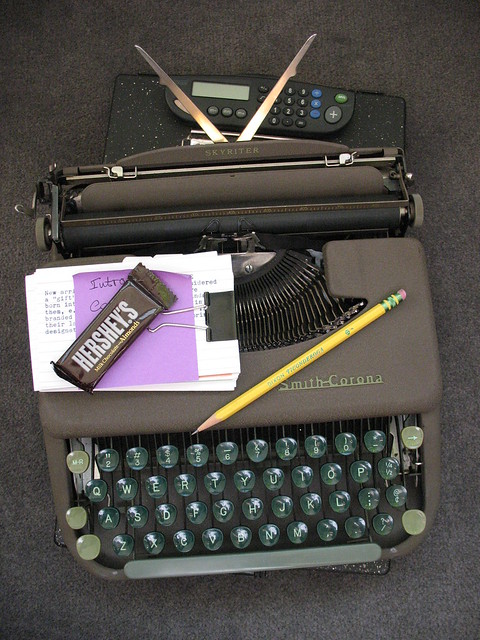
Flickr Credit: mpclemens
If you haven’t heard of NaNoWriMo, I assume that you are one of two groups: a) not a writer, or b) a new writer who hasn’t been around long. Both of those are fine: the existence of National Novel Writing Month never once mentioned itself to me until I was in eighth grade.

I succeeded that year, tried the next year, got bored, and haven’t done it since.

I will not be writing a novel next month. I’m writing one in December. It’s a superhero story, family based, about divided loyalties and duty and a bunch of great stuff I haven’t really hammered out yet. I’m planning, and I’m working on getting into the genre.

I am totally cool with this.

There are a lot of lists out there telling you to give in, do NaNoWriMo, and with reckless abandon just let your novel fly onto the page—I’ll give you an argument for the opposite.

In Defense of Writing Delays (Or, 5 Reasons Why You Don’t Have to do NaNoWriMo)

1. Community is Distracting—well, that’s not something you hear every day. Yes, writing groups and circles can be super exciting and encouraging, but they’re also another reason to be on the Nano website (not to mention Facebook, and Pinterest, and our email, and why don’t we go on Youtube while we’re at it?). Some people need community, but not everyone can handle the self-control community requires.

2. Timing Complications—now, you are always going to hear that every day is busy—write anyway! This is true, but at least in my annual schedule, November possibly the worst month I could choose to write a novel. April is another one. I’m not going to deal with a crackdown month in school and a novel at the same time; my energies are better focused on small projects. ALSO, Nano almost makes it sound like you can’t write a novel any other month. Guess what? You can. I’m writing my novel in December, because there is less stress and more time available to me—I’m sure I’m not the only one.

3. Pressure and Competition—this isn’t two teams pitted against each other at the Superbowl, waiting for devastating loss and heartbreak when your team loses to Victoria’s, goshdangit—it’s a friendly activity among compatriots. Nonetheless, some people don’t want to deal with that kind of pressure, myself included. If something happens, fine, I still haven’t lost anything, and I can work just as hard without repercussions.

(As you may have noticed, I am rather lax when it comes to my writing habits, which is perhaps why I am not the best writer in the world.)

4. Readiness Factors—I’m not ready to write my novel. You may not be ready, either. Despite October being “National Novel Planning Month” I am not the kind of person who can fit her ideas into a month of thinking. I’ll write when I’m ready. On the flip side, you may be ready to go this instant—why wait? Like Nike might suggest, it’s totally okay to “just do it.”

5. You’re Still a Writer Anyway—interestingly enough, a writer writes. They don’t have to blog, share their writing, do NaNoWriMo, or anything else, so long as they write. I don’t think Nano is much fun. If you don’t, don’t plague yourself: you can still be a writer anyway.


So there you have it. Blogging. NaNo. Nope.


What do you think? Are you going to do NaNoWriMo, or are you skipping this year? Why?

Sunday, October 12, 2014

Turns of Phrase

If you've been following this blog already for a short while, you can't have failed to notice my regular sign-off:

Khodafez.

Khodafez is a very interesting word, with a very interesting etymology and definition, that I try to use it when possible.

Khodafez is essentially a parting-term in Farsi, very common in Iran. A "good-bye", or "farewell", or "fare thee well", if you will.

The official phrase is khoda hafiz, which means literally "May God be your guardian". Most Persians just shorten this to khodafez, which I personally prefer. That is the history of this strange term.

I am a language nerd. I look up etymologies of words in other languages and study their etymologies and original meanings and spellings. I compare words in different languages: for example, the Spanish rojo, the French rouge, the Italian rosso, and the delightfully unrelated Portuguese vermelho. English itself is a language hog. It has selfishly taken and borrowed words from other languages and adapted them to its needs. The result? We speak French peppered with some Spanish, Italian and other languages, and speak it with a German accent.

Part of the allure of languages are the different phrases used. Below are some of the phrases that different languages have. Can you guess what they mean?

slainte
entre nous
segun San Lucas
mahalo nui loa
Animo!
ab aeterno
folie a deux
joie de vivre
cri de coeur

This is a weird topic, I know. But it's still interesting to learn languages, or at least parts of them. For in learning languages, you gain insight in their culture and history, too. That's why etymologies are so fascinating.

In addition, some of the lesser-known languages here in the West have a certain allure that the European ones can't equate. Everyone can guess what "adieu" means, but how many people, how many of you, readers, before reading this post, knew what "khodafez" meant? Exactly. My personal motto in life is "style over substance". In this case, it works perfectly. The allure, the intrigue, over a mysterious language such as Farsi is much more fulfilling than French. This is not to say I hate French or am denigrating it - quite the opposite. I love French. Je suis un etudiant de la langue. But it is worth discovering other languages, not just the common ones that everyone and their mother knows or is learning.

There are an estimated 6800 languages in the world today. Try and discover a new one today. For the esoterically inclined, there's Aymara and Oubykh. For those who want something that's rather well-known but want an exotic flair, there's Hawaiian, or Korean, or Danish. Discover something.

Now, I bid you, dear Reader, adieu, or as you might expect:
Khodafez.

-R.R.

Tuesday, October 7, 2014

Henry V


I want you to understand that I have had a very busy weekend.

I spent Saturday getting through quite a bit of homework, not to mention other writerly duties and editing my application for the biggest scholarship in Colorado. I drank tea Saturday night and ate chocolate chips whilst I developed a new system of classifying villains I simply cannot wait to unveil in a few weeks.

Sunday was spent at church, and other than homework, editing two novels, planning another one, and writing other blog posts, I spent an hour and a half (or 30 Christmas songs, if you prefer), developing a Hogwarts castle and promptly filling it with dinosaurs.

Clearly, I am a busy girl.

For that, I have decided to humbly present a stimulating video produced by my favorite comedy show, so that you might learn a little bit about Henry V.


I expect your full forgiveness. Expect a better post next week!

Tuesday, September 30, 2014

As it Were


Flickr Credit: Lee Coursey

If you’ve heard at all about the recent controversy regarding the AP U.S. History censorship issues in
Colorado, let’s just say I’ve seen some of the stuff going on.

If you haven’t heard you can Google your own articles, but the principle of the matters it that the conservative school board is considering a review of the APUSH curriculum, and most people are considering this an attack on history and an attempt by the school board to try and control the amount of liberal material students will receive.

There’s a lot of things to be said about the issues, and I’m not going to pretend I have everything figured out. Do I think APUSH should remain uncensored? Absolutely. Does that instantly make the school board evil? No.

But I still know what is going on. A board member named Julie Williams has said she wants a curriculum that “present positive aspects of the United States,” “promote patriotism” and “should not encourage or condone civil disorder, social strife or disregard of the law.” (source)

Is that necessarily a bad sentiment? I don’t think so. Patriotism is a noble goal.

My argument is against the second part of that sentence.

You cannot promote patriotism without explicitly delving into events that involve “civil disorder, social strife, and disregard of the law.”

We don’t have to condone it.

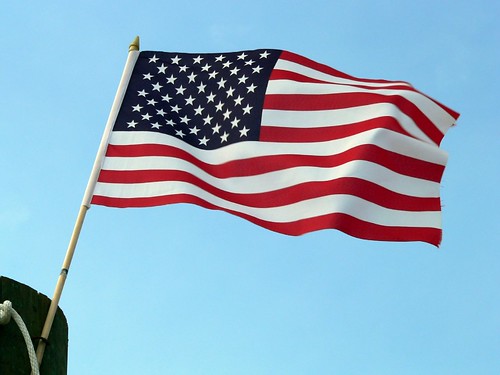
Slavery is a black stain on the American flag. Atrocities committed during the Civil Rights Movement, presidential assassinations, Jim Crow, abortion, Hiroshima, legal actions during the Great Depression, denial of the freedom to marry, pollution and our mistreatment of the environment, our actions in Vietnam, management and mistreatment of the mentally ill, Prohibition, messy embargoes, concentration camps and anti-Semitism (yes, I’m still talking about the US of A), blatant crimes against Native Americans, the Salem Witch Trials, prominent drug use, McCarthyism, the World Wars—these are things that mar my country’s history.

Americans have killed. They have been unfair. They have supported injustice and even gone against the very principles brave men and women founded this country upon.

I don’t feel guilty about it, because I’m not responsible for wars that took place fifty years before I was born. I had nothing to do with that.

But I do feel sadness—whether I was born or not, these events changed the people who lived during those times, which changed their children, which eventually changed the people who have raised me. Now I am who I am in part because of this. It is part of my heritage. It is part of my culture.

I am not proud that America has caused so much strife.

I am proud to learn that many of those obstacles we have overcome.

And I am ready to have faith that if history is to repeat itself, those telltale stains which still blot our everyday lives will continue to fade as we fight for justice and equality and freedom.

This is my pride as an American. This is what I hope students in Colorado will still have the right to learn, whatever the school board does or doesn’t intend, and I wish it just as much for every other student in America.

We are a great nation with a great many sins. We must not take pride in our sins, but still know them, because no matter what the future brings, the people who are alive (regardless of what country to which they belong) have a responsibility to all the other people who are alive, a greater responsibility to those who have died to get us here, and the greatest responsibility to those who will next be born.

What is that responsibility?

I’m sure everyone has a different opinion. All I know is this—we’re not going to solve today’s problems by sweeping yesterday’s problems under the rug.

So show me my American sins. I am not afraid.

Saturday, September 27, 2014

Immortality

"Make sure they spell my name right." ~Armand Silva, Fringe

We often wonder what posterity will think of us. Indeed, what mark will we make on the world? Will future generations remember our daring exploits, to become the stuff of legend? Will we be cursed and scorned, delegated to obscurity? Or will we be no one?

"...He will know her name
And be well pleased remembering it, for in the old days,
Though she had young men's praise and old men's blame,
Among the poor, both old and young gave her praise."

The lines above are from Her Praise, by William Butler Yeats, a paean to his longtime love, Maud Gonne. Gonne was a social worker - in the sense that she worked tirelessly to help the plight of so many of the poor, particularly the Irish. The poem is a very beautiful one, one of my personal favorites. In the poem, Yeats mentions that he discusses Gonne with his rich, well-to-do friends, and all of them scorn her due to associating with the riffraff. In fact, some ignore her entirely- they mention other things, like a new book.

Yet, when Yeats goes to the poor, he asks around to see if any know who Gonne is. If they are poor enough ("if rags be enough he will know her name") they will know her, and praise her, for all she did to help them.

That is Maud Gonne's legacy. Who today knows who she is? Apart from a biography, her name mentioned in conjunction with Yeats, and the above poem, that is her legacy. Very little for a legacy, don't you think?

The interesting thing is that so many people today are immortalized through a single reference, or through extremely few remnants of their life and times. Sappho, the ancient Greek poet, has less than 200 scraps of her poems to her name.

I mentioned once before in a post that we'd be lucky if we were remembered, 150 years from now, by our great-great-grandchildren. Unless your family is the type to recall every single ancestor since the time of George Washington, then, no, you will not be remembered. I don't know who my great-great-grandfather was. I'd like to know. But the tragic thing of having ancestors who lived in another country is that often there are no records of ancestry, no census data. The knowledge of my family goes up to about my great-grandfather, and that's about it. I have asked, time and again, about my ancestry. No one has information. Nor do I think I will find any.

For some (not me, necessarily, but it does unnerve me some), the idea of being forgotten after death (or even in life, at old age) is disturbing and unbearable. We all know the stereotype of the "poor, old, and alone" man or woman, forgotten by all, either with no family or scorned by the few members they have left. He or she dies alone, with no one by their bedside, no one to hear their last words. In a House episode, one of the best ever, an old, homeless man with terminal cancer goes up to Dr. Cameron and requests for her to watch him die. Throughout the episode, we see her sitting by his bedside, offering to give him morphine or something to ease the extremely painful death that is lung cancer. He refuses. He says that no one will remember him in life, and he needs to suffer, so someone can remember him - Dr. Cameron herself. That is pathos at its finest, and incredibly distressing.

So then, what must be do then, to attain immortality? Immortality in its true sense, to live forever, is impossible. However, in the metaphorical, historical sense, it is possible. To be remembered, celebrated for centuries after death, like so many historical figures, is very tricky. Humanity is fickle. We may think "Oh, well, we'll remember Kim Kardashian and Barack Obama and Justin Bieber in 2114!" Will we? Barack Obama is likely to be remembered. But there are so many presidents who have not, and will not, be remembered. Who knows who Millard Fillmore is, or Chester Arthur, besides the American History student or history buff? Kardashian and Bieber will likely be forgotten too. There are countless singers and personalities who were famous once, and then forgotten. Buddy Holly (well, not so much, if the proliferation of his hipster glasses are any indication), Bill Haley and many more singers from the '50s and beyond have been forgotten or remembered by comparatively few people not from the era in which they existed.

The sad truth is - very many of us will not be largely remembered by humanity. But you can make a difference in people - in someone's family, in a community, in many different places. Try to make a difference - and be remembered. This is an awkward topic to discuss, but I find it fascinating. But that's the way to achieve immortality - make a difference. A very big difference.

(And make friends with poets who will write in praise of you. That always helps.)

Khodafez.

-R.R.

Tuesday, September 16, 2014

Here and Here: Why Setting Matters


Flickr Credit: Vern

Do me a favor and check out this link really quick. Skim it, tell me which story element gets the shortest bit of advice.

Pausing.

Pausing.

That’s right—setting.

Now, to be clear, I have no problem with the ideas on that page. I mean, they’re not exactly wrong. But here’s the thing: if a story’s setting isn’t integral to the story, it’s been written wrong. Oops, sorry to break your heart. Sure, the place a story takes place seems trivial, and after all, all our stories are just the same but in different places. And ought we think about whether we want the plot to be driven by the conflict, or perhaps a character?

Yes. But also no; setting matters just as much. Take a peek at some examples:


  • Artemis Fowl by Eoin Colfer
    • Artemis lives in Ireland because it is the most magical place in the world, Holly lives in Haven because it is the most populated fairy metropolis in the world. By extension, these are the two most important magical locations in the world—right where our heroes are.
  • To Kill a Mockingbird by Harper Lee
    • Scout’s home in the south sets the scene for racial prejudice and social crime. If you want to witness the injustice in the world, especially with moral characters, this is the place to do it.
  • Firefly created by Joss Whedon
    • Serenity has been called ‘the tenth character’ before, and as a ship she is more than the sum of her parts. While the crew visits many different planets, it is ultimately Serenity’s needs and failures that determine how Reynolds and his crew will live (or die).
  • Unwind by Neal Shusterman
    • The United States has again been ravaged by a war that has desolated life for would-be ordinary teens. The Heartland War has not only changed the land, but it has made teenagers the threat, and the country’s geography revolves around the idea that organ harvesting is not just a public service but a necessity. Talk about the land of the free.
  • The Things They Carried by Tim O’Brien
    • The Vietnam War puts young men out of their element and exposes them to pain and atrocities that will haunt them the rest of their lives. The land drowns them, the world has forgotten them, and many times, the isolation is enough to make one crazy.


We could go on. The Cullens need cloud cover, New York is the new Olympus, schoolboys need to be isolated from all human contact on an island, the aliens want all the baby mamas for the next generation of Almiri in the same place.

If there’s not a place where things can happen then nothing will happen. Setting matters.

The characters need to care—we choose to stay where we are for a reason, or we are forced to stay where we are for a reason. Why is the character there?

It must have a life of its own—funnily enough, main characters aren’t the center of the universe. The setting should have a culture and a geography of its own. What is this place?

It needs to be threatened or threatening—there are few motivations greater than defending one’s home or trying to get back to it (*coughTheOdysseycough*). What makes this place a hotspot for trouble?

It needs to fill the gaps—as I write this, I am wearing a Penn State tee and sweats from my school. Oh look, knowledge. I am in my room; I have nine notebooks in sight, five books within reach, Greek mythology decorations hanging from the ceiling, a pile of laundry I haven’t folded yet, and memes posted to the walls from my favorite shows and movies. Oh look, knowledge. What does this place say about the people who live there?

It needs to matter to the readers—ultimately we want to leave or to stay, and if we leave we should rejoice, if it is torn away we should cry, and if we should stay we should sing. How will this place resonate with readers?

See, setting isn’t just where the story takes place. Where we come from says a lot more about who we are than how we look. There’s a world out there that matters. To us. To them. To you. To me.

When you write setting, make us breathe its scent until we nearly drown. When you read it, stop and to smell the horizon. You never know—it just might matter.

What are settings that matter in your favorite books? And, as a bonus, what does your current setting tell us about you?

Tuesday, September 9, 2014

How I Rate Books—And Why it Matters


Flickr Credit: GSFC

2009, Rick Riordan publishes The Last Olympian, and I’m like, in seventh or eighth grade. I read it, and I love it, and I scribble it on my reading log in nearly indecipherable script. (De veras, I never realized how much my handwriting has changed in the last half-decade until I saw what a mess my writing used to be.)

Now, there was this 1-4 star scale on the Reading Log, which I actually attempted the first month I used it. Then I read The Maze of Bones, also by Rick Riordan, and gave it a 10. The Hunger Games got 150, North! Or Be Eaten got 2 million, Airhead got 11 million, Pandora of Athens got “like a gazillion,” The Emperor’s Code got a “centillion,” and The Lightning Thief and almost all subsequent books got infinity.

Then came The Last Olympian, and my poor little heart was filled with too much joy for infinity, so I’m sure you can guess what I rated it—“more than infinity.”

Yes, I still have those records.

What my 2009 self did not realize was that while infinity was very complementary towards Mr. Riordan’s books, I was completely devaluing every other book on my scale. Yeah, compared to a score of 2 (which I gave to Lord of the Flies) 2 million is a lovely score, but when you get up to 11 million and from there “more than infinity,” that’s not complementary at all!

As highly as I wanted to praise these books, I could only do so by shaming other books I’d read—some of which I truly loved.

When rating books, or anything, there always has to be a set scale. Amazon has a five-star scale, as does Facebook. IMDb uses a score out of ten, and Rotten Tomatoes gives a percentage out of 100. All things considered, each of these scales could be standardized to all match, and technically nothing would change, but I find that would take away some individuality, as well.

So where does that leave us? When creating a scale, we need three things:

1) Standardization—there must be a scale of some sort to encourage fair and easy comparisons, which will also demand specificity from the rater.

2) Simplicity—Infinity is a bad scale to go up to. It’s also hard to rate value based on electron content or whether it can pass rites of fire in your backyard. Make it easy to understand and easy to replicate, if necessary.

3) Individuality—What does each star (or number) mean? Is it like in school, where a 75% equals passing? Or as with Amazon, does 1 mean “I hated it,” 3 mean “I liked it,” and 5 mean “I loved it”? Will you choose an even scale, that demands choosing a side, or will you allow some gray area? How does this scale represent you, and what you believe about the content you’re reviewing?

Nowadays, I’m going on a five-star scale with a bonus question. It serves my purposes as a reader and watcher of movies, and it allows me to truly honor the media I love in reviews, and make sure I know what I want to return to.

Here’s what it looks like for books:

5—An amazing book, which I love and will remember fondly for years to come. Usually I identify with the characters, enjoy the plot, and admire the author’s choices for the text.

4—A good book, which is fun and interesting. It has good characters, a good plot, and there’s nothing wrong with it. It is simply a darn good book and I will enjoy rereading it.

3—An okay book, which was worth the read but imperfect. Maybe it wasn’t realistic, maybe it’s not my genre, maybe the plot was holey. I’d read it again, but I wouldn’t cry if I accidentally dropped it in the bathtub or something.

2—A poor book, which could have all sorts of problems, but isn’t completely past redemption. I’d reread it… probably.

1—Not worth reading again or I couldn’t finish it. Some books simply do not interest me or are so poorly written I can’t bother to see them through.

However, on my current reading logs, I don’t actually use this star system! That’s only for reviews on my other blog, Sometimes I’m a Story. When I’m putting books in my spreadsheet, I take into account one question:

Would I Read This Book Again?

To be willing to read a book again and again is, quite honestly, the highest praise I could ever give. If the answer is yes and I get stuck with varying degrees of quality, so be it. But I’ll save myself from the one-star books, and that is plenty for me.

What about you? How do you rate books? How does your system differ from mine?

Flickr Credit: Gabriel Lima