Showing posts with label Community. Show all posts

Tuesday, June 16, 2015

Blurry Interviews: Literary Liz

Hi Liz, thanks for agreeing to be interviewed for a Wandering in a Blur interview! As you know, we're all about art, literature, science, history, and all that great stuff. Let's start with something easy: What is your favorite piece of literature, and why?

Favorite piece of literature... I would say it's a tie between A Little Princess by Frances Hodgson Burnett and Watership Down by Richard Adams. The two are very different, but both are well-constructed stories with extremely lovable characters - and extremely hateable characters, for that matter.

Ooh, what are some of the hateable characters?

Miss Minchin in A Little Princess - she's the woman who runs the school  in which Sara Crewe, the main character, lives - and in Watership Down, General Woundwort, the tyrannical (not to mention violent) dictator of Efrafa, another warren.

I'm familiar with Miss Minchin. I've seen the movie, and also Sierra Bogress was in the musical a while back! I really like when we get to see literature in many different forms—I think of Pride and Prejudice based on our *cough* previous discussion. Do you like seeing literature brought to life in other ways, and do you have any examples?

I always find musical adaptations of literature fascinating, though it doesn't happen very often - a few years ago I saw a musical version of Sense and Sensibility and liked it a lot. Apart from that... I'm mostly disappointed by movie adaptations, unfortunately. And of course I'm always up for seeing live/filmed performances of Shakespeare and other plays, if that can be counted as literature!

Yeah, movie adaptions are a little tricky, for all of us. But if the AP Board says that Shakespearean plays are okay on the test, I feel like we can count it as literature, too! Switching gears a little bit, let's talk about art. Define art.

Art. Oh, goodness. That's really, really tricky. See, I recently took a class on art and music and basically the end argument was that art is whatever you say it is. For example, there's a piece called Fountain - created by Marcel Duchamp, a Dada artist - which is literally a urinal laid on its side. That's it. I think it was supposed to be a political statement. On the other hand, you can have something that's purely created for aesthetic appeal or whatnot, like many of the commissioned pieces from before the 1800s. That being said... I suppose I have to agree. Though I personally like art better when it's created for aesthetic reasons, or at least romantic ones (looking at you, Fuseli) art is, at its core, whatever we plop down and say is art.

As Guinan might say, it's in the eye of the beholder. How do you incorporate art into your daily life?

Short answer is, I don't - not intentionally. At least I think I don't. The closest I can get would be that I tend to notice things about the world around me that could be called artistic, whether it be the symmetry of a flower or a weirdly shaped roof or the drawing technique in a Calvin and Hobbes comic. Other than that - I don't think I incorporate it much.

It's funny, because whenever I come to your house I feel like it's always so much more artsy than mine. Your brothers are musical and inventive, and there's always books and rich discussion hanging around, so it's funny that we should have a different perspective of your life. All right, one last question. Wandering in a Blur is about life and the blurry messiness we all experience as we live. What is a question you have that is part of your blur? 

Blurry messiness, huh? I guess the primary question (always in my face when I'm at college) is "What are you going to do with your life?" Sometimes I think I know, and sometimes I think I have no earthly clue.

Yeah, I know exactly what you mean. Thanks so much for doing this interview with me!

Liz is a Colorado humanities student, which means she studies all things awesome and having to do with how great humans are at their humanness. In her free time—and even in the time that isn't free—she reads obsessively and terrorizes her residence hall as the "crazy book girl." She can usually be found wrapped in a comforter, recovering from her latest book hangover. You can find her at her soon-to-be-blog, Literary Liz!

Sunday, January 25, 2015

TCWT January Blog Chain: Meaning and Magnificence

Oh, you thought you were done with me this month. You were wrong. Thanks to Teens Can Write Too! I’m participating in the blog chain AGAIN because John was kind enough to say it was okay.

Our Marvelous Hosts

This month’s prompt was suggested by me, and goes thusly:

“What is something you feel is generally written well in fiction? What is something you feel is generally written poorly?”


Obviously, every author brings everything they can to their work. It’s an agreement of our trade, and no strange one at that. We write because we must, but when we publish something, it is also something we tend to take pride in.

I’m not a huge fan of the phrase ‘labor of love,’ just because it sounds like an excuse. “I didn’t really learn how to use exclamation points or a spell checker before I published this, but, hey, I really put my heart into it!” Um, no. I’d rather read book from people who’ve learned the craft and can write a good story.

Anyway, authors want to write good stuff. The books that are famous and the books that we adore have something in common—they are artful, somehow. Sometimes it’s symbolism, or archetypes, or thematic elements. Other times it’s character arcs or certain plot devices that enamor us.

Either way, every book is going to make an assertion, and every book brings something to the table, however small.

Nor does art fail to breach genre or era.

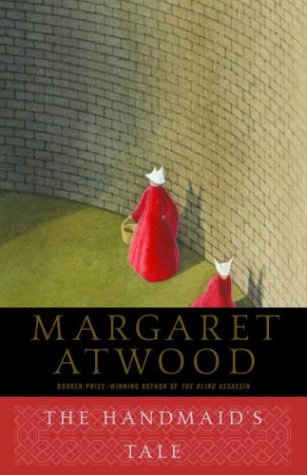
A book like The Handmaid’s Tale talks about human rights, religion, and the role of women in society. It was published in 1985.


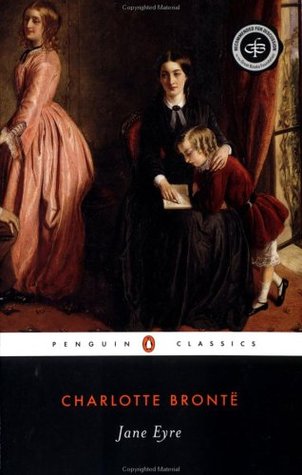
But then you’ve got Jane Eyre. It talks about individuality and duty, religion, and the role of women in society. It was published in 1847.


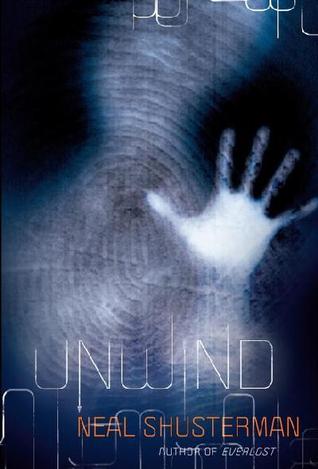
And then you’ve got The Unwind Dystology. The last book just came out, but Unwind came out in 2007. And it talks about human rights (especially to one’s own body), religion, and the role—no, the power—of teens in society. And the nice thing is, Neal Shusterman writes about the girls and the guys (so in a way, he’s just saying that the role of women is up-close-and-personal with that of men).


via Goodreads
(Also, I talked about women’s role in fiction a few weeks ago, so look at me following up on my own ideas.)

Every book brings something, and the books that last tell us is that writing is full of incredible meaning and power. A writer will never cease to write until a point that matters has been made, and well made at that.

It isn’t enough, though. Not for me.

Yeah, I like books that are symbolic (blatantly so, because that’s not my forte) and have thematic elements. Sure, sometimes it’s necessary we use these ideas so that everyone understands our point.

via Goodreads
Other times, I think authors can write the heart out of a good book—they’ll talk about life and its meaning
and our purpose and mankind, and then they’ll forget to give the story a soul.

The soul of a book is imperative for it to resonate with me, more than I can say in words.

Part of the reason that I love Neal Shusterman is that I feel what he wants me to feel. I know what those kids feel. I’ve never been that desperate, and I have never once thought my parents would think my life worth more in a divided state than whole. But I feel and know that anger, that resentment, the grief of the betrayal and the shame that comes with it all.

Like that, but with every book. My reaction. The memory. The feeling when you’re laying on your bed at
via Goodreads
three in the morning with tears in your eyes and a pit of despair in your heart—but just enough hope to see you through ‘til the morning. There’s joy and pain. Not too much, but enough. There’s a soul in books, that makes you remember them and makes you believe that this isn’t fiction at all—this is real life.

And like Elie Wiesel said, “Some stories are true that never happened.”

More than anything, books are a relationship. A contract, if you will, between the writer and reader.

We never read alone.

That is, unless the book doesn’t have a soul. And I think soul is different for every person. I didn’t have much a feel for "Fences" by August Wilson. I do not think I’m going to rush to read a book by William Manchester in a hurry. And I got bored reading The Hunger Games.

I was bored, but other people fell in love. Our taste in souls varies from person to person. It’s amazing.

Yes, we’re good at tackling the important stuff, the fragments imbued with meaning. Bring it to life and making it last? Well, we all need something to strive for.

Flickr Credit: Aaron Moraes

What do you think is written well, or poorly? And, if you’re in the blog chain, drop your link so I don’t forget to come by on your day!


Be sure to check out the rest of the chain!

5th While I Should Be Doing Precal

6thJasper Lindell's Other Blog

7thThe Upstairs Archives and Against the Shadows

8thMiriam Joy Writes

9thThe Ramblings of Aravis

10thSometimes I'm a Story

11th – Kira Budge: Author

12th – The Little Engine That Couldn't

13th – http://maralaurey.wordpress.com/

14th – http://dynamicramblings.wordpress.com/

15th – literallylovely

16thHorse Feathers

17thJulia the Writer Girl

18thButterflies of the Imagination

19thGalloping Free

20thalwaysopinionatedgirl

21st – https://deborahrocheleau.wordpress.com/

22ndThe Road Goes On

23rdClockwork Desires

24th – https://introspectioncreative.wordpress.com/

25thHi.

26thA Note From the Nerd

27thInsanity, Inc.

28thUnikke Lyfe

29th – http://teenscanwritetoo.wordpress.com/ (We’ll announce the topic for next month’s chain.)