It's a Saturday night, and I sit on a sofa with a laptop and two books. Music is playing, and I am trying to listen and hum along to songs in vain.
It's a problem I have increasingly encountered. I want to read, but the temptation of the laptop is overbearing. And I idly visit websites - Quora, my email, Reddit. Ultimately, I get bored and move to Spotify, that great bastion of music. It's the greatest thing since the Internet, I do believe. Being able to stream nearly every song you want in mere seconds - I do not take this for granted.
So I sit, and listen to Keane's "Bend and Break," and almost immediately, want to listen to a certain song lyric by The Kinks. So I listen to "A Well-Respected Man," which invariably reminds me of Collective Soul's "A Smashing Young Man," so I start listening to that. Then after, the awesome epic guitar riffs remind me of Nirvana and Bush, and off I go looking for my grunge playlist...
This is ADD made manifest. Something has happened to me. It has crept up on me, slowly, quite carefully. Consider. Once upon a time I would carry a book around with me everywhere, looking for every opportunity to read. I recall the beginning of seventh grade, when I discovered Agatha Christie's And Then There Were None. I borrowed the book from my teacher's library, and took it home and began to read. My uncle came, and took my grandmother and I out to lunch, and I brought the book with me. Afterwards, I went with my dad to the Home Depot, and guess what I brought with me?
This was five years ago, I recall. Today, in this year of grace, 2015, I sit with And Then There Were None mere inches away from this keyboard which I use to type this message. I have picked it up occasionally this evening, glancing through a few pages, remembering the great mystery surrounding Indian Island, the shocking murders, the unbelievable ending which to this day never fails to fill me with amazement and awe at Agatha Christie and her clever mind.
I cannot fully read the novel, though. This is not such a surprise, however. I have only ever reread one book without jumping around and skipping parts. And that's okay. The pleasure of rereading is to enjoy a book without all the introns and parts one may consider dull. One can go to a beloved chapter and reread it, word for word, and ignore the rest.
The discerning reader of this piece can't have failed to note that I mentioned there are two books on the sofa next to me. The second is a curious work that goes by the name of Titus Groan, by the most interesting of authors: Mervyn Peake. Peake's a most interesting person: a painter by trade, he wrote his most famous works, the Gormenghast trilogy, over a period of ten years. Peake was born in China to missionary parents before the Great War, and the memories and reminiscences of Chinese culture would stay with him. During the Second World War, Peake worked on propaganda posters for the British government to earn his bread and butter. Sadly, Peake died of Parkinson's (or Lewy Body dementia? the details are unclear) and suffered a great deal in his last years. His writing and artistic abilities largely disappeared, as he underwent electroconvulsive therapy. He died in 1968 at the age of 57.
I bring Peake up as the perfect metaphor. An artist, especially one such as Peake, is cautious, delicate. He creates a world so vast, so carefully and methodically, that it sneaks up on one. It is much like Tolkien's Lord of the Rings, or else Susanna Collins' amazing Jonathan Strange & Mr Norrell, or the vertiginous, hilarious The Wind-Up Bird Chronicle by Haruki Murakami. However, what they all have in common is that they require time. They require patience and many hours spent in a room, preferably with rosewood chairs and a pot of warm jasmine tea. Nothing less will suffice. I have not gotten past the first 10 pages of Titus Groan, because I understand this. I need time. The dilemma? I actually do have time.
I have a busy schedule, now more so than ever: an issue of the school newspaper I work on came out yesterday. AP exams begin Monday, and I am taking four this year. Several teachers have given nothing but tests in preparation, and I have been dutifully studying. (This, by the way, is my rather pathetic excuse for abandoning this blog for the past few months. Heather has been the very picture of grace, maintaining this blog and continuing the spirit of the Blur.) But for every night that I have spent up working on academics, extracurriculars and life in general, I have had an hour or so to myself, which I have largely frittered away on listening to Spotify and rechecking my email. School is the same way: during lunchtime, I could easily spend time reading. My lifestyle has created a false sense in me, the false idea that I do not have time to read.
But I will change. Two weeks hence, I will be done with all exams. I will still have work to do, but it will not be as much. And seven weeks hence, I will be done with school. And I will read. I must. You see, despite my aversion to reading that has started of late, I still want to read. There is this excitement, the idea of reading my way through a large stack of novels. Mervyn Peake may have devolved into a tragic insanity, but I will recover from my own tragic insanity.
Reader, you may have experienced this yourself. I encourage you to follow my lead, and disconnect yourself. Nothing is as important as time spent thinking and improving yourself. I have always been a fan of self-improvement and self-education, and reading is nothing less than that. A stack of novels, sitting on my desk and elsewhere, await. I will read my way through them.
I must.
Khodafez
-R.R.

Showing posts with label Conflict. Show all posts
Showing posts with label Conflict. Show all posts
Saturday, May 2, 2015

Monday, April 6, 2015
Color
15

I used to believe that people’s favorite colors were those not present in their souls.
I mainly I believed that due to one girl, who I shall call “Pam,” like the cooking spray.
Pam’s favorite color was yellow. My favorite color was (and is) gray. We are still two vastly different people, four years later.
The way Pam lived stunned me—in elementary school, you can pretty much live with any classmates. Sure, they can be annoying, or weird, just a little different, but you’re still children and everyone is essentially a good person. Now, in middle school, I saw that people could be terrible people, and it disgusted me.
I saw that she held grudges. I saw that she used writing as an exercise to write revenge stories, and to unleash violent, degrading emotions on people because she didn’t have the resources or the liberty to do it in real life. She laughed at pain. She crumpled at her own misfortune, oblivious to that of others. I watched her physically abuse her little sister over a TV remote, and since then she’s taken one of the nicest, most amazing humans I know to court with a story I doubt the veracity of—she still wants to hit him with a car.
What a dreadful, dreary place her soul must be, I thought. Filled with hatred and yuckiness and just plain meanness… She must like yellow because there’s no way it lives in her soul.
I, on the other hand, had a mind vibrant with stories. I ignored my own faults, of course. When I compared myself to her, she was focused on the beauty of the dollar store stickers on her pencil box, while I sat and watched the wind ripple through the crisp, long grass below the mountain view. It braided itself in the wind, and I smiled, because how much more beautiful could the earth be?
She was irritated I was not as enthusiastic about the stickers. You should appreciate the little things, she told me. Little did she know.
There was no gray for me. I saw beauty. I accomplished things. My mind was never empty, filled with stories and dreams of volcanoes, cats, dreams, and mountaintops I could touch with my finger. There were lush red ribbons and sparkling blue lakes, matte black helicopters, magical golden sparks.
There was beauty and love and adventure and passion and dreams and there was me. Just me. And I loved it.
There couldn’t be room for any gray in my soul, I thought. Not when I live in such a vibrant mind.
It’s changed. Others have disproved my theory. My love of gray has come from other areas. And I have learned that perhaps I don’t have any yellow in my soul, if I can’t learn to forgive her, either.
I used to believe that people’s favorite colors were those not present in their souls.
I mainly I believed that due to one girl, who I shall call “Pam,” like the cooking spray.
Pam’s favorite color was yellow. My favorite color was (and is) gray. We are still two vastly different people, four years later.
The way Pam lived stunned me—in elementary school, you can pretty much live with any classmates. Sure, they can be annoying, or weird, just a little different, but you’re still children and everyone is essentially a good person. Now, in middle school, I saw that people could be terrible people, and it disgusted me.
I saw that she held grudges. I saw that she used writing as an exercise to write revenge stories, and to unleash violent, degrading emotions on people because she didn’t have the resources or the liberty to do it in real life. She laughed at pain. She crumpled at her own misfortune, oblivious to that of others. I watched her physically abuse her little sister over a TV remote, and since then she’s taken one of the nicest, most amazing humans I know to court with a story I doubt the veracity of—she still wants to hit him with a car.
What a dreadful, dreary place her soul must be, I thought. Filled with hatred and yuckiness and just plain meanness… She must like yellow because there’s no way it lives in her soul.
I, on the other hand, had a mind vibrant with stories. I ignored my own faults, of course. When I compared myself to her, she was focused on the beauty of the dollar store stickers on her pencil box, while I sat and watched the wind ripple through the crisp, long grass below the mountain view. It braided itself in the wind, and I smiled, because how much more beautiful could the earth be?
She was irritated I was not as enthusiastic about the stickers. You should appreciate the little things, she told me. Little did she know.
There was no gray for me. I saw beauty. I accomplished things. My mind was never empty, filled with stories and dreams of volcanoes, cats, dreams, and mountaintops I could touch with my finger. There were lush red ribbons and sparkling blue lakes, matte black helicopters, magical golden sparks.
There was beauty and love and adventure and passion and dreams and there was me. Just me. And I loved it.
There couldn’t be room for any gray in my soul, I thought. Not when I live in such a vibrant mind.
It’s changed. Others have disproved my theory. My love of gray has come from other areas. And I have learned that perhaps I don’t have any yellow in my soul, if I can’t learn to forgive her, either.
Tuesday, February 17, 2015
The League of Gentlemen: A Disappointment
Sometimes I wish there were real, classy villains.
James Bond villains. Classy villains. Delicious men with such twisted idealism and beautiful plotting that you can’t help but fall into their gushing grins and want to be evil, too.
(On an unrelated note, I am wary of getting married because inevitably I only fall in love with people of questionable moral fiber, and I don’t want to spend the rest of my life in prison.)
There’s a scene in the episode “Engagement” in the second season of the show The Vicar of Dibley, wherein the Vicar invites Hugo to tea with her. She assumes he’s wondering why she’s asked him over, but to her surprise, he claims he’s figured it out.
He isn’t.
But, I did get the film to watch with my father—this old black and white film from the sixties that I had to borrow from another library system—just to see what Hugo is talking about.
Fair enough, men who have all been slighted in one way or another by the government/military gather together, all hoping to steal enough cash to embarrass their enemies and live comfortably on an island somewhere until they die.
It was an okay movie, I suppose (obviously, I have to make allowances for the film quality and choices, simply due to the era in which it was filmed), but the story frustrated me. Because these were not classy, dazzling men. They were miffed military men in suits and with petty crimes on their hands.
They ran everything like a polite military operation, secret and dirty and secluded in a day and age before security cameras and annoying neighbors could easily rat them out. Sure, they wore the right clothes, but the silkiness of an Alpha was completely absent.
What was worse, spoiler alert, in the end, they all get arrested because a little boy noticed the faulty plates on their getaway truck. He turned them in to the police and they tracked down the owners.
That made me mad—oh, why did they have to lose? Dad looked at me mildly amused, and reminded me that this was the sixties, and in the end the government and goodness had to win.
Which I thought was stupid.
Granted, I have a sense of morality (somewhere…) and I do tend to have faith in my government, and in the people around me to do the right thing at the right time. Murder is wrong, being mildly rude to someone isn’t particularly acceptable, and I go to church.
All that kind of goes away as soon as I enter a fictional novel.
Books broaden perspectives, change the fabric of morality, philosophy, and science simply as the author sees fit. Gods can be created and destroyed, beauty designed and ugliness tempered. Murder becomes a goal, death is desire, blood is a must and it glitters like rubies on the floor. I expect to breathe in the injustice from the pages and absorb it and breathe it out like smoke.
I wanted them to win… Obviously, this league of gentlemen wasn’t perfect and in fact, with a couple of tweaks to the storyline, I could have easily foiled their plan from the comfort of my own living room.
But I wanted them to win, because they were still the heroes. Their evil was the good. And they disappointed me.
Sometimes I wish villains were real. Not because I don’t have a sense of morality, or because I think that their fundamental actions and beliefs are justified. Sometimes I simply wish that there were people like that—classy, with shiny shoes and tailored suits, neatly combed hair, secret lairs, massive danger, and ultimate calm. People who can do their evil right.
Of course, I should be careful what I wish for. Getting kidnapped by terrorists would probably be just as educational, but I doubt I’d enjoy it at all.
And yet… Kananga, Nero, Rugen, the Darkling, Thorne, the list goes on and on. No matter how much you root for justice, you also have to root for these guys, because they are fantastic.
Take that, my poor league of gentlemen. You deserved what you got.
James Bond villains. Classy villains. Delicious men with such twisted idealism and beautiful plotting that you can’t help but fall into their gushing grins and want to be evil, too.
(On an unrelated note, I am wary of getting married because inevitably I only fall in love with people of questionable moral fiber, and I don’t want to spend the rest of my life in prison.)
There’s a scene in the episode “Engagement” in the second season of the show The Vicar of Dibley, wherein the Vicar invites Hugo to tea with her. She assumes he’s wondering why she’s asked him over, but to her surprise, he claims he’s figured it out.
“You know the film League of Gentlemen, where they gather together the seven master criminals of the world, each of them skilled in their own particular trade—master of disguise, master lock-breaker, explosives expert, etcetera—are all assembled to pull off the greatest robbery of all time. I assume it’s that; am I right?”
He isn’t.
But, I did get the film to watch with my father—this old black and white film from the sixties that I had to borrow from another library system—just to see what Hugo is talking about.
 |
| via hypnogoria.com |
It was an okay movie, I suppose (obviously, I have to make allowances for the film quality and choices, simply due to the era in which it was filmed), but the story frustrated me. Because these were not classy, dazzling men. They were miffed military men in suits and with petty crimes on their hands.
They ran everything like a polite military operation, secret and dirty and secluded in a day and age before security cameras and annoying neighbors could easily rat them out. Sure, they wore the right clothes, but the silkiness of an Alpha was completely absent.
What was worse, spoiler alert, in the end, they all get arrested because a little boy noticed the faulty plates on their getaway truck. He turned them in to the police and they tracked down the owners.
That made me mad—oh, why did they have to lose? Dad looked at me mildly amused, and reminded me that this was the sixties, and in the end the government and goodness had to win.
Which I thought was stupid.
Granted, I have a sense of morality (somewhere…) and I do tend to have faith in my government, and in the people around me to do the right thing at the right time. Murder is wrong, being mildly rude to someone isn’t particularly acceptable, and I go to church.
All that kind of goes away as soon as I enter a fictional novel.
Books broaden perspectives, change the fabric of morality, philosophy, and science simply as the author sees fit. Gods can be created and destroyed, beauty designed and ugliness tempered. Murder becomes a goal, death is desire, blood is a must and it glitters like rubies on the floor. I expect to breathe in the injustice from the pages and absorb it and breathe it out like smoke.
I wanted them to win… Obviously, this league of gentlemen wasn’t perfect and in fact, with a couple of tweaks to the storyline, I could have easily foiled their plan from the comfort of my own living room.
But I wanted them to win, because they were still the heroes. Their evil was the good. And they disappointed me.
Sometimes I wish villains were real. Not because I don’t have a sense of morality, or because I think that their fundamental actions and beliefs are justified. Sometimes I simply wish that there were people like that—classy, with shiny shoes and tailored suits, neatly combed hair, secret lairs, massive danger, and ultimate calm. People who can do their evil right.
Of course, I should be careful what I wish for. Getting kidnapped by terrorists would probably be just as educational, but I doubt I’d enjoy it at all.
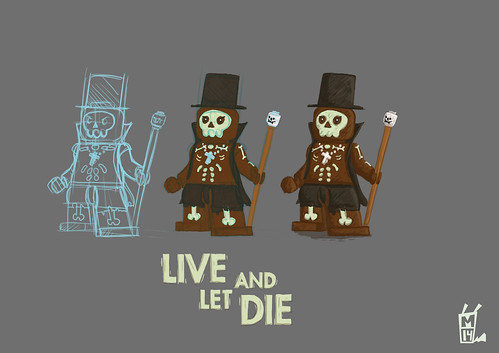 |
| Flickr Credit: Julien CARTRY |
Take that, my poor league of gentlemen. You deserved what you got.
Saturday, December 6, 2014
The Trope of the Geek and Nerd
What is a geek? What is a nerd?
A typical answer can be summed up thus: the lone, obsessive individual, with bad teeth, pale skin, glasses that look suspiciously hipster, who labors day after day, working on some great invention, often based off obscure principles like Feynmanian diagrams of space-time, or else some new way to rewire circuits to get free Wi-Fi. This individual (of course!) must be bullied relentlessly, or ignored, or shunned. His friends (should he be lucky to find any worthy of his interest and time) are the same as he: lone, obsessive individuals. Eventually, twenty years into the future, our hypothetical character creates an amazing invention or website that nets him millions of dollars and a mansion, the girl (there's always a girl somewhere in the story) and the football jock that bullied him and made his life miserable is stuck working for the nerd/geek, as Bill Gates said in his oft-copy and pasted quote:
Today, we essentially worship the idea of the geek. To many of the common public, he is a god, in a way - someone who is intelligent enough to solve the mysteries of the Universe. (Yet, somehow, he can't find a way to save his lunch money from getting stolen.) Silicon Valley (most notably, Google) works the public's fascination to their advantage! Google offers free lunch to all their employees, because, you know: with all those nerds and geeks walking around, the bullies are sure to steal their lunch money. Shows like The Big Bang Theory play this to their benefit. Many are in love with the idea of the unsung geek or nerd being isolated all his love and somehow creating a great website or something. (Hey, doesn't that sound familiar?) Even all the cool kids and cliques at school are in on the act: wearing suspenders, hipster glasses, and other adornments of the geek/nerd, to seem "smart".
Does this all sound familiar? Yes? Absolutely. I'd be surprised if you didn't. Silicon Valley, the Internet, and our technological revolution has brought the geek and the nerd to hero-status in society. Is there really a difference? Yes, technically, which I will enumerate thus:
A geek is someone who is obsessed with one thing and one thing only: it can be anything. A nerd is a more academic person, who is usually obsessed with science, Star Trek, Dungeons and Dragons, &c.
(Compare this to TV Tropes' definition: The distinctions between "geek" and "nerd" are many and various - or maybe there aren't any distinctions at all. The meaning of both always depends on who is using the term.)
Is all of this starting to sound a bit cliche? You're right. Because, my dear friends: nerds and geeks are nothing more than tropes. The way we view them are cliched and tired. Are all nerds and geeks obsessed with mathematics and Star Wars and physics?
However, I am here to destroy this idea of the geek and nerd.
Recently, I was told by someone that I was a geek because "I liked math and hard stuff." Bear in mind, and I mean this in the nicest, least derogatory way, that person was painfully wron. I had to explain to them that I was not a geek because I liked maths. In fact, I don't like maths. Yes, I'm taking calculus, but I don't find it engaging or absorbing. I'd MUCH rather read a sonnet by Shakespeare and analyse it than find the area under a curve. Many, many more people would, too. They are extremely intelligent people. Yet, for some reason, we cannot consider them nerds and geeks, because of peoples' misguided beliefs that math and science are the only things that make nerds and geeks, well, nerds and geeks. And that is the BIGGEST PROBLEM. This is a stereotype, my friends: and stereotypes are never write. Or right. :(
However, as the liberal arts and social sciences continue to be overlooked in exchange for more modern, futuristic pursuits, this question is likely going to be asked more and more often. Yes, I think math and science are important, but that doesn't mean that I have to like them. (Except chemistry. Chemistry is awesome.)
I identify as both a nerd and geek. I have many academic pursuits. I am singlehandedly obsessed with many different authors (and can quote the entirety of Macbeth, for the most part. LAY ON, MACDUFF!) And I even havehipster trope glasses. (But they are prescribed.) I don't have much of a social life. But, at the same time, I don't know who Captain Kirk is, whose side Boba Fett is on, whether World of Warcraft is better than Dungeons and Dragons, or whatever. And I don't really like math and science. What does that mean, then? To most people, well...
I'd like to point out that I'm generalizing a bit, here. I know not everyone views geeks and nerds as science and math and obscure pop-culture fanatics. But our society and culture in general is perpetuating a trope that, in my eyes, is wrong and accurately misrepresents a portion of individuals who do self-identify as a geek or nerd, such as I. It should not be "wrong" to like literature or any other social science and yet be delegated to some other title, like "history buff", which, for the record, sounds like a shoe polish. The shoe polish that polished Washington or Wellington's floor... (Ha ha ha...That was a terrible joke.) And also, keep in mind that I am not bashing science and math fanatics in any way. They do make our world work, now. And I can respect that. Otherwise, without them, I would not be here, posting on a computer. I just have a different view of the world than them, and I feel that we should all respect these different views and tastes.
So there's my semi-monthly rant. Agree or disagree, I'd love to hear your opinions. Sound off below in the comments.
Khodafez,
-R. R. (The nerd and geek!)
A typical answer can be summed up thus: the lone, obsessive individual, with bad teeth, pale skin, glasses that look suspiciously hipster, who labors day after day, working on some great invention, often based off obscure principles like Feynmanian diagrams of space-time, or else some new way to rewire circuits to get free Wi-Fi. This individual (of course!) must be bullied relentlessly, or ignored, or shunned. His friends (should he be lucky to find any worthy of his interest and time) are the same as he: lone, obsessive individuals. Eventually, twenty years into the future, our hypothetical character creates an amazing invention or website that nets him millions of dollars and a mansion, the girl (there's always a girl somewhere in the story) and the football jock that bullied him and made his life miserable is stuck working for the nerd/geek, as Bill Gates said in his oft-copy and pasted quote:
Be nice to nerds. Chances are, you'll end up working for one.
 |
| Behold, the Trope! |
Does this all sound familiar? Yes? Absolutely. I'd be surprised if you didn't. Silicon Valley, the Internet, and our technological revolution has brought the geek and the nerd to hero-status in society. Is there really a difference? Yes, technically, which I will enumerate thus:
A geek is someone who is obsessed with one thing and one thing only: it can be anything. A nerd is a more academic person, who is usually obsessed with science, Star Trek, Dungeons and Dragons, &c.
(Compare this to TV Tropes' definition: The distinctions between "geek" and "nerd" are many and various - or maybe there aren't any distinctions at all. The meaning of both always depends on who is using the term.)
Is all of this starting to sound a bit cliche? You're right. Because, my dear friends: nerds and geeks are nothing more than tropes. The way we view them are cliched and tired. Are all nerds and geeks obsessed with mathematics and Star Wars and physics?
However, I am here to destroy this idea of the geek and nerd.
Recently, I was told by someone that I was a geek because "I liked math and hard stuff." Bear in mind, and I mean this in the nicest, least derogatory way, that person was painfully wron. I had to explain to them that I was not a geek because I liked maths. In fact, I don't like maths. Yes, I'm taking calculus, but I don't find it engaging or absorbing. I'd MUCH rather read a sonnet by Shakespeare and analyse it than find the area under a curve. Many, many more people would, too. They are extremely intelligent people. Yet, for some reason, we cannot consider them nerds and geeks, because of peoples' misguided beliefs that math and science are the only things that make nerds and geeks, well, nerds and geeks. And that is the BIGGEST PROBLEM. This is a stereotype, my friends: and stereotypes are never write. Or right. :(
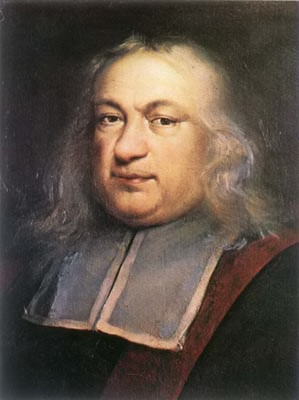 |
| Does he look like a geek to you? Proto-geek, perhaps. Credit: Wikipedia |
Our world flows in a mathematics-science kind of STEM pattern now. It didn't used to. In the past, as I have regrettably lamented, humanities were king -- indeed, as far back as the Middle Ages, the monks who lived, sheltered in cloisters for eternity, were the only ones who could read and write -- and so were considered educated and wise and all. They were the nerd/geeks of their day. In the nineteenth and twentieth centuries, this remained true as well, as the most educated people - Miltons and Shelleys and Byrons and Murrays were usually literate and intelligent. There were some notable mathematicians, like Newton, Lagrange, and Fermat, but most of them were famous for work in another field. (For example, Fermat was a judge.)
However, as the liberal arts and social sciences continue to be overlooked in exchange for more modern, futuristic pursuits, this question is likely going to be asked more and more often. Yes, I think math and science are important, but that doesn't mean that I have to like them. (Except chemistry. Chemistry is awesome.)
I identify as both a nerd and geek. I have many academic pursuits. I am singlehandedly obsessed with many different authors (and can quote the entirety of Macbeth, for the most part. LAY ON, MACDUFF!) And I even have
I'd like to point out that I'm generalizing a bit, here. I know not everyone views geeks and nerds as science and math and obscure pop-culture fanatics. But our society and culture in general is perpetuating a trope that, in my eyes, is wrong and accurately misrepresents a portion of individuals who do self-identify as a geek or nerd, such as I. It should not be "wrong" to like literature or any other social science and yet be delegated to some other title, like "history buff", which, for the record, sounds like a shoe polish. The shoe polish that polished Washington or Wellington's floor... (Ha ha ha...That was a terrible joke.) And also, keep in mind that I am not bashing science and math fanatics in any way. They do make our world work, now. And I can respect that. Otherwise, without them, I would not be here, posting on a computer. I just have a different view of the world than them, and I feel that we should all respect these different views and tastes.
So there's my semi-monthly rant. Agree or disagree, I'd love to hear your opinions. Sound off below in the comments.
Khodafez,
-R. R. (The nerd and geek!)
Tuesday, September 30, 2014
As it Were
 |
| Flickr Credit: Lee Coursey |
If you’ve
heard at all about the recent controversy regarding the AP U.S. History
censorship issues in
Colorado, let’s just say I’ve seen some of the stuff going
on.
If you haven’t
heard you can Google your own articles, but the principle of the matters it
that the conservative school board is considering a review of the APUSH
curriculum, and most people are considering this an attack on history and an
attempt by the school board to try and control the amount of liberal material
students will receive.
There’s a
lot of things to be said about the issues, and I’m not going to pretend I have
everything figured out. Do I think APUSH should remain uncensored? Absolutely.
Does that instantly make the school board evil? No.
But I still
know what is going on. A board member named Julie Williams has said she wants a
curriculum that “present positive aspects of the United States,” “promote
patriotism” and “should not encourage or condone civil disorder, social strife
or disregard of the law.” (source)
Is that
necessarily a bad sentiment? I don’t think so. Patriotism is a noble goal.
My argument
is against the second part of that sentence.
You cannot
promote patriotism without explicitly delving into events that involve “civil
disorder, social strife, and disregard of the law.”
We don’t
have to condone it.
Slavery is a
black stain on the American flag. Atrocities committed during the Civil Rights
Movement, presidential assassinations, Jim Crow, abortion, Hiroshima, legal
actions during the Great Depression, denial of the freedom to marry, pollution
and our mistreatment of the environment, our actions in Vietnam, management and
mistreatment of the mentally ill, Prohibition, messy embargoes, concentration
camps and anti-Semitism (yes, I’m still talking about the US of A), blatant
crimes against Native Americans, the Salem Witch Trials, prominent drug use,
McCarthyism, the World Wars—these are things that mar my country’s history.
Americans
have killed. They have been unfair. They have supported injustice and even gone
against the very principles brave men and women founded this country upon.
I don’t feel
guilty about it, because I’m not responsible for wars that took place fifty
years before I was born. I had nothing to do with that.
But I do
feel sadness—whether I was born or not, these events changed the people who
lived during those times, which changed their children, which eventually
changed the people who have raised me. Now I am who I am in part because of
this. It is part of my heritage. It is part of my culture.
I am not proud that America has caused so
much strife.
I am proud to learn that many of those
obstacles we have overcome.
And I am ready to have faith that if history
is to repeat itself, those telltale stains which still blot our everyday lives will
continue to fade as we fight for justice and equality and freedom.
This is my
pride as an American. This is what I hope students in Colorado will still have
the right to learn, whatever the school board does or doesn’t intend, and I
wish it just as much for every other student in America.
We are a
great nation with a great many sins. We must not take pride in our sins, but
still know them, because no matter what the future brings, the people who are
alive (regardless of what country to which they belong) have a responsibility
to all the other people who are alive, a greater responsibility to those who
have died to get us here, and the greatest responsibility to those who will
next be born.
What is that
responsibility?
I’m sure
everyone has a different opinion. All I know is this—we’re not going to solve
today’s problems by sweeping yesterday’s problems under the rug.
So show me
my American sins. I am not afraid.
Tuesday, September 2, 2014
On Suffering
 |
| Flickr Credit: KristyFaith |
I do not want to write this post. In fact, I have been actively avoiding writing it ever since I wrote the last
one. At first, I thought I had time. Then I got sick.
I do not know what it is like for you when you get sick. Maybe you enjoy getting sick, because you get off from school or work. I have not taken a sick day in nearly six years—and it is not fun. I do it because I don’t want to make up work. And also to prove that I can.
I do permit myself to get sick on the weekends, and I am writing this on a Sunday. My nose and lips are chapped and I keep pulling off flakes of dead skin that itch if I don’t and sting if I do. I don’t like moving my lips. My head throbs when I cough—less than it did yesterday, but still some. My back is sore especially, and my knee. I don’t know why, but apparently organs that have no business feeling ill decide that they can catch a cold too. There’s a tickle in the back of my throat that is a cough yet to come, and it will bring with it gobs of phlegm when my lungs can take no more. And my lungs have taken quite a beating.
You see, I have asthma. A cold that could take a normal person 2-4 days to get over might take me a week. Maybe more, if it’s bad. I woke up this morning hyperventilating, not because I was panicking, but because my lungs had contracted to the point where I could not logically meet my oxygen quota if I wanted to survive. I wrangled up my medicine, started my penguin nebulizer, and breathed.
There are a lot of good feelings in the world. It feels good when you are loved. It feels good when you finish an Avengers movie. It feels good when you wake up to a red sky and white snowdrifts. But to this day I maintain that there is no better feeling than being able to breathe again. It hurt to suck air into my lungs, but I didn’t care, because the pain was better than the wheezing.
I’m not complaining—that is simply how it is. It sucks when I am sick, but if I think about it, it is the same for all the book characters we know and love.
There is suffering. It lasts. It’s not easily solved. Things hurt in places they aren’t supposed to hurt, and there are other distractions that are only making it worse. They wake up to the terror of almost losing the battle, only to find a way to make it through… at a price.
Voldemort is on the prowl, he has spies everywhere. Harry has to deal with breaks in friendship, he doesn’t know where to go, and the Dark Lord’s wish is that he sacrifice himself alone in the forest. They will win… but the dead piling up don’t see their newfound freedom.
Frodo has the ring, but the land is devastated and he doesn’t know if he will make it. There is only Sam, and him, and Gollum, and Gollum wants the ring. He doesn’t want to throw it in—but he will, and the darkness will end… but Frodo will pay for with his health and free memories until he goes to the Grey Havens.
There is a huge mess, the Cat in the Hat has abandoned them, and Mom is coming home this instant. They clean up, but, ironically, the children must lie to their mother to maintain their integrity.
Scarlet.
Otto Malpense.
Jane Eyre.
Captain America.
Jesus Christ.
There is suffering. And that matters. Not everybody has such a hard time with colds. Some people are sent to put a ring down a volcano and defeat the evil eye that has watched the land for many years. Some people are sent to die for the world’s sins and go to Hell. But some people get colds.
The point is this: every book, every story must have suffering. There is no point otherwise. Maybe you felt sorry for me when I described my cold, maybe you didn’t. But regardless, you did learn that I am in a fight, and that makes me interesting. I am not just sitting at this computer, scrolling through Pinterest and chatting with my friends. There are other things, other pains, and they haunt me even past my sleep.
And that is why it matters to them too. Characters must be interesting—even the secondary or tertiary characters. They must have pains. They must have struggles that they will die for or die from. It makes us care… and the good ones remind us of ourselves a little bit, too.
How do you feel about suffering?
Subscribe to:
Posts (Atom)