Showing posts with label History. Show all posts

Tuesday, June 9, 2015

The Adventures of George Washington

“George Washington came first and he was perfect.”

I think Jonathan Coulton’s song sums it up pretty well. You know, we put him on our one dollar bill, we put him on our nickel, he’s half the reason we celebrate President’s Day, we have myths and picture books and stories about him—in a lot of ways, George Washington is the American rock star.

I wonder if he’d hate it.

First of all, he had a temper, so it’s not out of the realm of possibility that he would blow up at some people. Secondly, he really admired self-control, honor, and service, and strove towards those things [source]. I think he could probably be proud of the service he gave to the United States, but with those virtues, I imagine he also had some element of modesty to him.

Yes, he was pretty awesome, but as a later president would say, “Leadership consists of nothing but taking responsibility for everything that goes wrong and giving your subordinates credit for everything that goes well.” [source]

If George Washington held himself to a high moral standard, and was committed to being not only diligent but humble in service to his country, do you really think he’d approve of the fame we’ve slathered on his memory?

It is impossible to know. He is dead. He has been, for a very long time. However, I like to think that he would want his legacy to continue in our own attempts to live lives of morality and diligence, rather than idolizing his image.

For this reason, I am okay with The Adventures of George Washington.


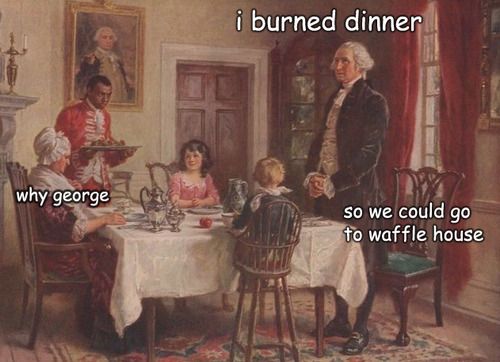
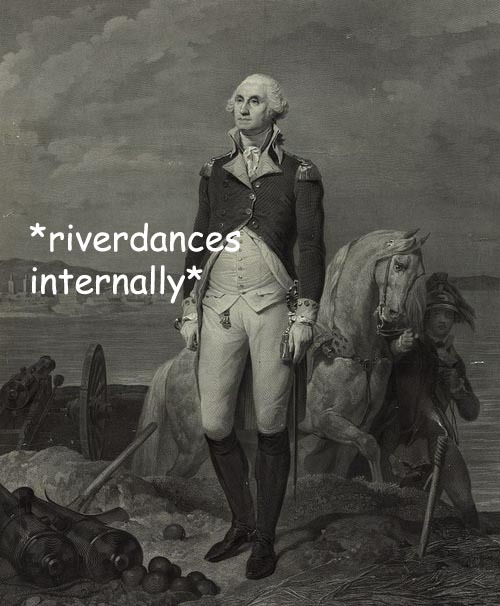
The Adventures of George Washington comes from a Tumblr series, wherein the portraits of George Washington are captioned with dialogue—Washington’s captioned persona is flippant, impatient, forceful, and at best, unkind.


I don’t think Washington himself would fully appreciate these. After all, they are more or less making fun of his character, and I doubt he’d enjoy that kind of disgrace.


However, I do think they’re okay in principle, because over the years, we’ve forgotten that George Washington was just a man. A great man, but still a man. It’s fun to put him in anachronistic situations, and to show him using our slang—Adventures turns Washington back into a common man.

As a series, I think they’re hilarious. I love these things. I fully hope there to be many, many more in the future, because some of these are just to die for.

I shall show you my favorites, because I love them.


Who are some of your favorite heroes? Do you think it’s better to remember them as great people, or do you think they’re better remembered as common people who served their communities?

Monday, March 23, 2015

Joy

07

My Breath of Joy
Flickr Credit: Vincepal
I did not feel joy today.

Or, at least, if I did it feels far away.

In the morning there was serving. Feed the dog, feed the cat, feed the rat, feed yourself. Pick up the sister and bring her to her playdate, work for a little while then bring her back home. Do the dishwasher.

I forgot to do the laundry. Or maybe I just didn’t do it, because the dryer might be broken and I will have to ask about that.

In the afternoon there was homework. Applications, Federal Reserve notes, Ceremony, correo. I didn’t even get to biology.

I saved a lot of it for tomorrow.

In the evening there was dinner. I had wanted to watch a certain movie, but the will left me. I thought I would write, and I did. It’s just that they called me and told me they still wanted me to apply for a scholarship, even though it is ludicrous to ask someone to write you a letter of recommendation within three days, even though I had to write about behind a humanitarian even though I am pretty sure writing is still the entertainment industry. I wrote 3,000 words in three hours.

Most of that paper is a lie. Fabrication. Bull. Not the information, it’s true. But it’s still a lie to try and get something when you don’t want it in the first place.

Now it is night. There was coughing, so I stopped it. There was cold, so I warmed it. There was silence, so I dispelled it. There was nobody, and I don’t know what to do about that.

Brittle girl, brittle world. If even you can call her that.

It’s hard to remember pain when you are content, or even happy. It can be a curse.

It’s hard to remember joy when you are apathetic, and a shell. It is merely unfortunate.

There is coughing again. The drops are cherry flavored. I will have to stop it again.

Sunday, January 25, 2015

TCWT January Blog Chain: Meaning and Magnificence

Oh, you thought you were done with me this month. You were wrong. Thanks to Teens Can Write Too! I’m participating in the blog chain AGAIN because John was kind enough to say it was okay.

Our Marvelous Hosts

This month’s prompt was suggested by me, and goes thusly:

“What is something you feel is generally written well in fiction? What is something you feel is generally written poorly?”


Obviously, every author brings everything they can to their work. It’s an agreement of our trade, and no strange one at that. We write because we must, but when we publish something, it is also something we tend to take pride in.

I’m not a huge fan of the phrase ‘labor of love,’ just because it sounds like an excuse. “I didn’t really learn how to use exclamation points or a spell checker before I published this, but, hey, I really put my heart into it!” Um, no. I’d rather read book from people who’ve learned the craft and can write a good story.

Anyway, authors want to write good stuff. The books that are famous and the books that we adore have something in common—they are artful, somehow. Sometimes it’s symbolism, or archetypes, or thematic elements. Other times it’s character arcs or certain plot devices that enamor us.

Either way, every book is going to make an assertion, and every book brings something to the table, however small.

Nor does art fail to breach genre or era.

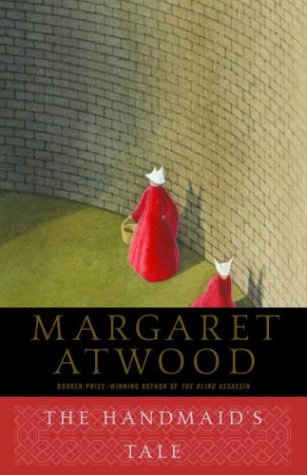
A book like The Handmaid’s Tale talks about human rights, religion, and the role of women in society. It was published in 1985.


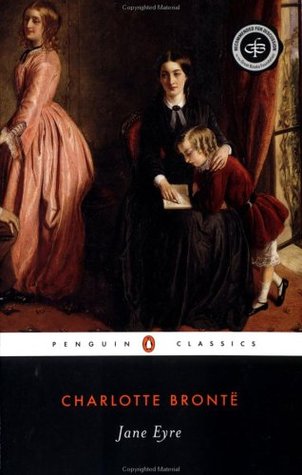
But then you’ve got Jane Eyre. It talks about individuality and duty, religion, and the role of women in society. It was published in 1847.


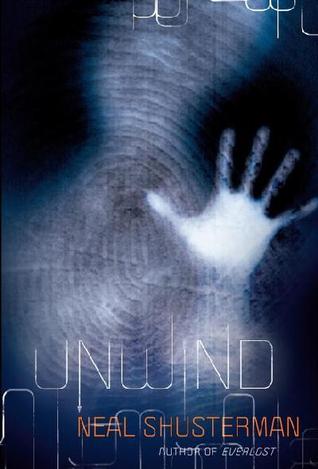
And then you’ve got The Unwind Dystology. The last book just came out, but Unwind came out in 2007. And it talks about human rights (especially to one’s own body), religion, and the role—no, the power—of teens in society. And the nice thing is, Neal Shusterman writes about the girls and the guys (so in a way, he’s just saying that the role of women is up-close-and-personal with that of men).


via Goodreads
(Also, I talked about women’s role in fiction a few weeks ago, so look at me following up on my own ideas.)

Every book brings something, and the books that last tell us is that writing is full of incredible meaning and power. A writer will never cease to write until a point that matters has been made, and well made at that.

It isn’t enough, though. Not for me.

Yeah, I like books that are symbolic (blatantly so, because that’s not my forte) and have thematic elements. Sure, sometimes it’s necessary we use these ideas so that everyone understands our point.

via Goodreads
Other times, I think authors can write the heart out of a good book—they’ll talk about life and its meaning
and our purpose and mankind, and then they’ll forget to give the story a soul.

The soul of a book is imperative for it to resonate with me, more than I can say in words.

Part of the reason that I love Neal Shusterman is that I feel what he wants me to feel. I know what those kids feel. I’ve never been that desperate, and I have never once thought my parents would think my life worth more in a divided state than whole. But I feel and know that anger, that resentment, the grief of the betrayal and the shame that comes with it all.

Like that, but with every book. My reaction. The memory. The feeling when you’re laying on your bed at
via Goodreads
three in the morning with tears in your eyes and a pit of despair in your heart—but just enough hope to see you through ‘til the morning. There’s joy and pain. Not too much, but enough. There’s a soul in books, that makes you remember them and makes you believe that this isn’t fiction at all—this is real life.

And like Elie Wiesel said, “Some stories are true that never happened.”

More than anything, books are a relationship. A contract, if you will, between the writer and reader.

We never read alone.

That is, unless the book doesn’t have a soul. And I think soul is different for every person. I didn’t have much a feel for "Fences" by August Wilson. I do not think I’m going to rush to read a book by William Manchester in a hurry. And I got bored reading The Hunger Games.

I was bored, but other people fell in love. Our taste in souls varies from person to person. It’s amazing.

Yes, we’re good at tackling the important stuff, the fragments imbued with meaning. Bring it to life and making it last? Well, we all need something to strive for.

Flickr Credit: Aaron Moraes

What do you think is written well, or poorly? And, if you’re in the blog chain, drop your link so I don’t forget to come by on your day!


Be sure to check out the rest of the chain!

5th While I Should Be Doing Precal

6thJasper Lindell's Other Blog

7thThe Upstairs Archives and Against the Shadows

8thMiriam Joy Writes

9thThe Ramblings of Aravis

10thSometimes I'm a Story

11th – Kira Budge: Author

12th – The Little Engine That Couldn't

13th – http://maralaurey.wordpress.com/

14th – http://dynamicramblings.wordpress.com/

15th – literallylovely

16thHorse Feathers

17thJulia the Writer Girl

18thButterflies of the Imagination

19thGalloping Free

20thalwaysopinionatedgirl

21st – https://deborahrocheleau.wordpress.com/

22ndThe Road Goes On

23rdClockwork Desires

24th – https://introspectioncreative.wordpress.com/

25thHi.

26thA Note From the Nerd

27thInsanity, Inc.

28thUnikke Lyfe

29th – http://teenscanwritetoo.wordpress.com/ (We’ll announce the topic for next month’s chain.)

Thursday, January 15, 2015

The Glow from the Silver Screen

Hello, dear Reader. Before we begin my semi-monthly essay on Life, the Universe, and Everything, I'd like you to go over to this link (opens in a different tab) and listen to this song. It's about 11 minutes, but it helps you better understand the topic I will discuss. You don't have to listen, but you should. It probably won't make sense, but after this post it will.

*     *     *

Last year (by that I mean my sophomore year), I became obsessed with what the genre-ists refer to as noir fiction. The "hard-boiled", crime detective novels from the 1930s, classic movies from Hollywood's Golden Era, with tough-talkin' detectives with trench coats and square jaws, like Humphrey Bogart and Peter Lorre!

Crime noir is a weird genre. The dialogue is very different than what you might expect. It's very sparse, like Hemingway, but it's vivid, lurid and lusty (as lusty as 1930s standards can get you. It's all good, though.) Consider the first sentences from my favorite noir novel, The Thin Man:

"I was leaning against the bar in a speakeasy on Fifty-second street, waiting for Nora to finish her Christmas shopping, when a girl got up from the table where she had been sitting with three other people and came over to me. She was small and blonde, and whether you looked at her face or her body in powder-blue sports clothes, the result was satisfactory. "Aren't you Nick Charles?" she asked.
I said: "Yes".
She held out her hand. "Dorothy Wynant. You don't remember me, but you ought to remember my father Clyde Wynant. You-"

Reading crime fiction, especially by the two masters of the genre, Raymond Chandler (who's best known for The Big Sleep and his Phil Marlowe stories) and Dashiell Hammett (who wrote the above novel, The Thin Man, and perhaps the most evocative of them all: The Maltese Falcon.) Everyone knows about these two, and people usually enjoy Chandler's stories more. But I'm a Hammett fan and I always will be. Chandler portrays the pointlessness of it all, the hard rugged life, and Hammett does too, but he makes it more witty and glamorous. Not too much, though. But The Thin Man, for example, has characters going in and out of speakeasies faster than you can turn the page.

Hammett does a good job of recreating the stereotypes and fantasies we have of the era. You watch Casablanca, The Maltese Falcon, His Girl Friday, all these great classic Golden-Age films with the greats: Douglas Fairbanks, Clark Gable, Maureen O'Sullivan, Lauren Bacall (who just died last year), Ingrid Bergman...If you're like me, you want to enter the fantasy. You want to become a Prohibition era detective, like Hammett's "blond satan" Sam Spade, who's always digging for the truth, if you'll pardon the pun, or or a sweet dame who's in a spot of trouble but turns out to be a traitorous beauty, like Brigid O'Shaughnessy.

*     *     *

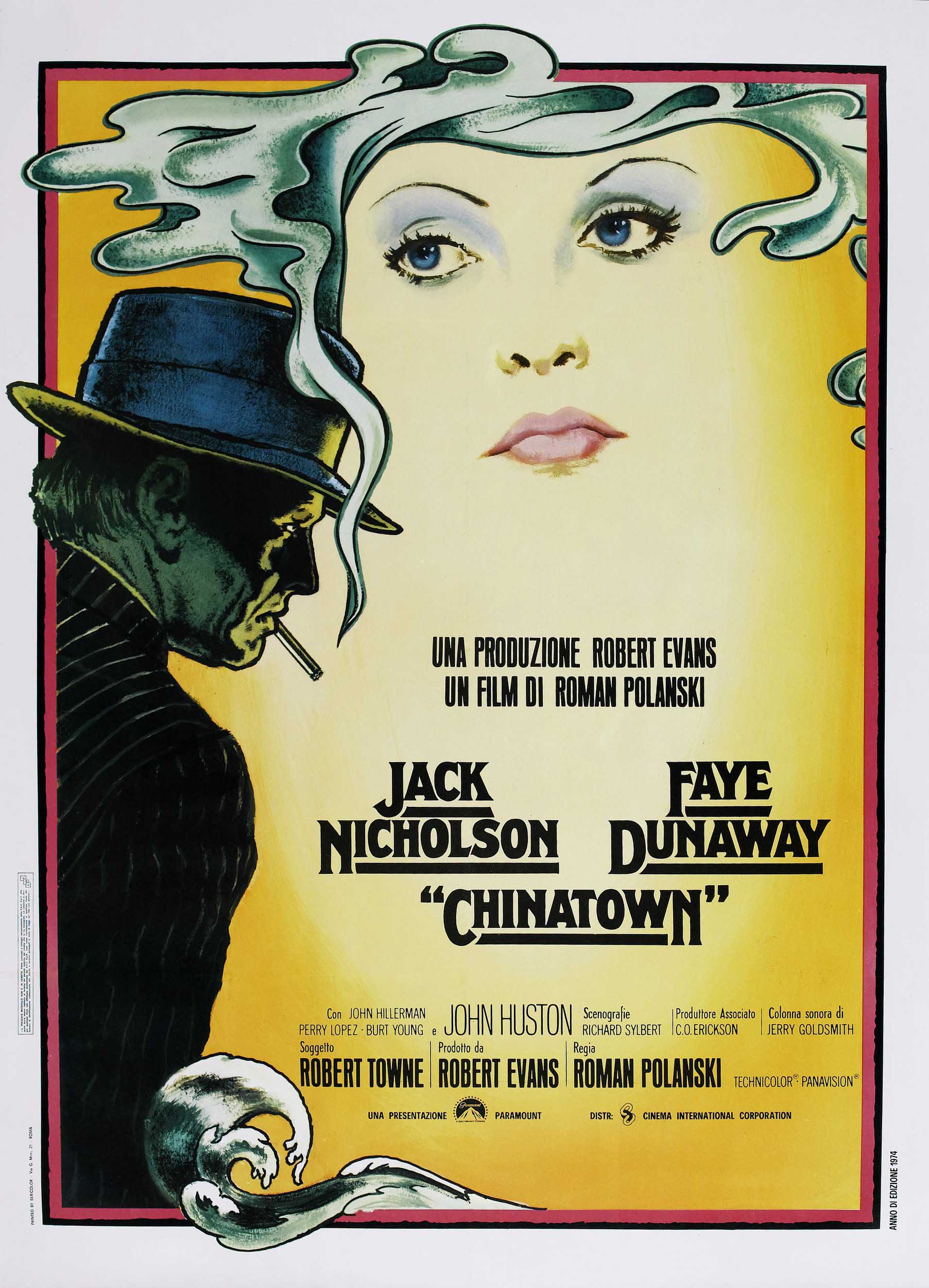
The film poster to the right looks like something from the '30s, am I right? Nope. The movie was made in 1974. It is perhaps one of my favorite movies, not just about gangsters and detectives, but of all time. I mentioned before how I really didn't focus on the pointlessness and despair of crime noir, but Chinatown does an excellent job of showing it to people. The life of Detective Gittes is hard, from tracking down murderers to dealing with dead people and an unstable woman. In the end, nothing matters: justice can never be served but with blood and revenge. "Forget it, Jake. It's Chinatown."
 
The point is this: crime noir gets to show us two sides of an era: the glitzy, svelte allure of speakeasies and Humphrey Bogart, and the harsh, rough and tumble lifestyle of Jack Nicholson getting his nose slashed up.
 
Overall, crime noir is a good genre if you enjoy history and classic movies, and gangsters, and trench coats. As I said before, it's a hard genre to get into. There's codes and jargon for everything. It was a hard life to live back then, and sparse dialogue and snappy comebacks are a result of that. (As was heavy drinking and excessive smoking, but that's neither here nor there.) XD
 
*     *     *
 
The song I had you listen to was full of sound clips from The Maltese Falcon, starring Humphrey Bogart. There were numerous other references to silent-era films and Golden Age greats. Yes, it may have seemed odd and confusing. The song is a good one, though, especially the ending: the ending shows how movies are powerful. If you've seen Hugo Cabret, you know this: the fantasies and delusions of actors on the silver screen are inspiring. We go to the movies for release, to see characters who may be like ourselves, or ones who live completely different lives than our own. We go to the movies to indulge our curiosity, to experience the thrill of seeing scenes that make us go "What if?" What if we met our lifetime love on the Titanic? What if we were all connected to a computer matrix mainframe? What if we were silent-era movie actors who were replaced by the "talkies"?
 
Movies are amazing things. They really are. Like books, they can show us so much more than what we know, take us to worlds afar. This is what is so amazing about media.
 
Fantasy would fill my life, and I love fantasy so much...
 
-R.R.


Sunday, January 11, 2015

The Cyclical Nature of Things

Recently, I was forced to lie abed for almost a week. I had a cold, which developed into pneumonia. It was horrible, and uncomfortable, and all the adjectives that you can use to describe the condition of having your lungs fill with fluid.

I'm much better now, but one of the (very) few benefits that came out of being ill was that I got to spend some time reading. And one of the books I came to read was my favorite one, Cloud Atlas. I've read Cloud Atlas a good four times by now, cover-to-cover. And one of the things that always strikes me is the cyclical nature of the book. It ends where the story begins. (It's actually far more complicated than that, but let's just say that for now.) This idea of a "symmetrical" and "cyclical" narrative is not new. It's actually used by a lot of authors and singers and creative types. We seem to be so drawn to the idea that everything is a cycle, that everything's connected.

One of my favorite games is Six Degrees of Separation. I usually play it with myself, in regards to my thoughts. I'll be thinking about something, and try to relate it to another topic as quickly and relevantly as I can. The idea of everything being connected fascinates me.

*      *      *

We tend to think of time and space as linear. As Walter Bishop will tell you, that is wrong. It is an illusion. Of course, it's quite easy to imagine why we tend to think of time as linear. Our lives are, for the most part, linear. Everything happens in succession to the thing before it. 2014 turns into 2015, summer turns into autumn, morning turns into night.

Many religions and culture actually viewed time as cyclical, however. You'll remember the infamous 2012 doomsday predictions, said to have come from the Mayans' calendar ending. Their calendar did end...in a way. For them, 2012 was but the beginning of a new age. The world would not turn around, at least I don't think so. (That idea of a serpent eating the sun whole is a bit excessive, in my not-so-humble opinion.) For the Mayans, it would be like following the year 2012 with the year 0 or 1. For them, the universe was cyclical, and everything would repeat itself, slightly different from before.

Surprisingly, many cultures follow this idea, that time is a mutable "boomerang" that can repeat itself. It can manifest itself in different ways: Buddhism and Hinduism have the idea of reincarnation, that one can be reborn into a new life and live several lifetimes. For them, an individual does not die, but rather go on to a new life. There is no clear end date. Time simply marches forward, in cycles.

But even more interesting is a theory that has manifested itself in a book by an author named Thomas Cahill. Cahill submits that Judaism, and later, Christianity, are actually responsible for our view of time being a "straight arrow", from the Creation of the universe to the end times. Judaism and the religions that derive from it, as you'll remember from world history, have been very influential and so radically different from the rest of the world's ideas of traditional religion, with only one god, no death sacrifices (that I know of), and much more. We can chalk the idea of linear time to them as well, according to Cahill. Interesting theory, isn't it? I'm not a new-ager or someone that readily submits to new religious ideas at the drop of a hat (or at the dawn of the Age of Aquarius, ha ha) but it's something to think about.

*      *      *
Back to books and lucre (which, incidentally, is a quote from Cloud Atlas. Talk about returning to the beginning!) There's not much else for me to mention, except that as a modern society, we're returning to this idea of a cyclical wheel of time. We love the idea so much, it's found in our movies and books and creative consumptions. Cloud Atlas, as I mentioned above, topped the bestseller lists ten years ago. Movies like Inception challenge our ideas of what is happening, and when, and in what pattern. The Harry Potter series has several instances, most notably with Hermione Granger's Time-Turner. Overall, time-travel and time mutability has become commonplace in our culture.
 
Before this ends, I leave you with two final quotes to think about.
Strip back the beliefs pasted on by governesses, schools and states, you find indelible truths at one’s core. Rome’ll decline and fall again. Cortés’ll lay Tenochtitlán to waste again, and later, Ewing will sail again, Adrian’ll be blown to pieces again, you and I’ll sleep under Corsican stars again, I’ll come to Bruges again, fall in and out of love with Eva again, you’ll read this letter again, the sun’ll grow cold again. Nietzsche’s gramophone record. When it ends, the Old One plays it again, for an eternity of eternities. Time cannot permeate this sabbatical. We do not stay dead long. Once my Luger let me go, my birth, next time around, will be upon me in a heartbeat. Thirteen years from now we’ll meet again at Gresham, ten years later I’ll be back in this same room, holding this same gun, composing this same letter, my resolution as perfect as my many-headed sextet. Such elegant certainties comfort me at this quiet hour.   ~Robert Frobisher, Cloud Atlas

And the second quote is, "Recently, I was forced to lie abed for almost a week. I had a cold, which developed into pneumonia..."

Everything ends where it began. :)

Khodafez.
-R.R.

Tuesday, November 18, 2014

Louis Pasteur

Photo Credit: Britannica
Diseases are great. Diseases are fun! That is, unless you catch them, in which case they are significantly less great and even less fun.

Louis Pasteur is great, and Louis Pasteur is fun—and that’s a definite statement. Known as the god/father of microbiology, Louis Pasteur is probably one of the coolest scientists of the nineteenth century. And, if you’ve ever had a glass of milk, then you have something to thank him for.

In reality, you don’t even have to drink the milk to see it on the carton: down near the bottom there’s a little schpiel that will say “PASTEURIZED MILK” and maybe the grade and some other great facts to help you bond with your milk.

And you’re like, “Great. Leave me alone; I want to blow bubbles in my milk before Dad gets home.”

But hear me out.

If you don’t know anything about pasteurization, let me sum it up for you in simple terms (and we’ll talk about milk, because I know about milk):

  • milk has bacteria in it, really gross pathogenic bacteria that makes you sick if you ingest it
  • milk men and women take the pathogenic milk and put it in a heater
  • we heat up the milk to 154.4 degrees Fahrenheit for thirty minutes
  • the heat affects the bacteria that’s present in the milk; the enzymes in the milk are denatured 
    • proteins that keep the bacteria functioning are heated into a different shape so they can no longer do their jobs—this is also the reason that you could die from a fever
  • the denatured bacteria dies—but some bacteria remains unaffected by the heat
  • the pasteurized milk is shipped out, and we keep our milk in the fridge to prevent the unaffected bacteria from spoiling our milk too fast

(Of course, people still drink fresh milk sometimes. They probably don’t die. But, in today’s society where we don’t all own cows and we don’t want to go to the store every day, it works out to take out the bacteria to make it last longer.)

But wait, there’s more.

The thing is, this guy who actually started developing the pasteurization process, Louis Pasteur, was actually a pretty awesome guy—practically a scientific superhero. Check it out.

Louis Pasteur was a chemist, first and foremost, and principal among his interests was germ theory. Back in the day, a popular theory ran around of spontaneous generation: that is, stuff came out of nowhere because God said, “Let there be maggots.” And thus maggots were.

So maggots randomly appeared on meat, food went bad for no reason, and mice came out of dirty underwear (no, I’m serious, we watched this video in Bio Monday morning. It’s worth your two minutes).

Louis Pasteur was like, “Don’t be ridiculous,” and experimented with beef broth to show that there was something in the air that we couldn’t see that made food go bad. He proved it, too: his broth left out to the open air would spoil and turn nasty (I’m sure you’ve left something out too long, too) while the broths that were sealed or swan-necked (twisted over) didn’t spoil nearly as fast.

However, he had more on his plate than mere beef broth. No, Louis Pasteur studied fermentation as well!

I just studied a whole unit on cellular respiration, so I’m not going to give you that speech, but I will say this: if you’ve heard about fermentation, then it’s probably been in relation to one of two things: your sore muscles after you’ve exercised, or beer.

Plot twist, Louis Pasteur actually came up with initial pasteurization processes for wine and beer, not for milk! While studying different organisms that multiply with oxygen (aerobically) or without (anaerobically) in his fermentation studies, Pasteur used his methods to make his alcohol safer to drink.

But that’s not all.

Monsieur Pasteur’s studies in microbiology saved the silkworm industry in France—knowing nothing of silk worms himself, Pasteur spent five years studying silk worms, breeding them, and then coming up with methods to prevent their contamination with harmful microorganisms so that France, not to mention every other country with silk worms, could keep making silk.

And, on top of that, he came up with vaccinations for Anthrax (independently of Koch, by the way), chicken cholera, and rabies.

Yes, rabies. He dried out a bunch of rabid rabbit skulls in his yard and then stuck pieces of their brains in a nine-year-old kid’s stomach. (And that’s still pretty much what they do to you if you get rabies today.)

But, truly, if he were around today, I would give this guy an air five, because apparently he didn’t like to shake hands.


So, what did you learn today?


Tuesday, November 11, 2014

Surprize & Discovery in 1807 England

Today's topic was inspired by two truly marvelous stories: Susanna Clarke's Jonathan Strange & Mr Norrelland the 2003 movie Master and Commander: The Far Side of the WorldBoth are set in roughly the same era: the latter in 1805 and the former begins in 1807. All three deal with England during the Napoleonic Wars (hence the title).

England during this time was in the middle of a very feisty and contentious war with France. It was also an exciting time in History: there was America's Ograbme, impressments, Ali Pasha taking over Egypt, the international slave trade ending...It was definitely a time of great change, excitement, surprize (I use the archaic spelling) and, of course, most importantly - discovery.

Russell Crowe as Captain "Lucky" Jack Aubrey.
Photo Credit: weebly.com
For the unaware, Master and Commander is, put quite simply, the story of a British ship, the Surprize, trying to destroy its French enemy, the Acheron. But it is so much more than that! It is a wonderful movie, especially if you appreciate the time period and context in which it takes place. There is no Jane Austen and her Mr. Darcy here - rather, a rough, but playful, exciting, but sobering account of war and discovery on the high seas.

Jonathan Strange & Mr Norrell, on the other hand, is slightly different. By slightly, I mean alternate-history slightly. In an alternate England, magic was alive and well until the 1600s - when the Raven King and the Aureate magicians disappeared. Everyone knew the history of magic - but none knew how to conjure it - until Mr Norrell, and later, his wayward disciple, Jonathan Strange come along during the Napoleonic Wars, and bring magic back to Britain.

Both of these have a main element of discovery among them - but also showcase its effects quite well: the benefits, the joy, and the dangers resulting from curiosity.

*      *       *
Discovery, of any kind, is always exciting and slightly shocking, by definition. To look upon or learn something that was never seen or known before is humbling, and yet there is a certain thrill about it. From discovering a new element, to naming a new species, to reading a previously unknown letter by someone famous, to unearthing a new artefact, to proving a new theorem - all provide a great sense of either hope or terror. Because, for every cure for polio or smallpox, there was also the discovery of Ebola and how to create an atomic bomb. For every discovery of America, there was also a great genocide and mass murder of countless innocent people. For as humans, we have been entrusted with the greatest gift of all: curiosity. But as humans, we also have a sadly notorious proclivity for using that curiosity for horrifying things. Keep this in mind.

*      *      *
Mr. Norrell, the
greatest magician of the Age.
Photo Credit: fantasybookreview.co.uk
In Jonathan Strange & Mr Norrell, the peaceful naivete of Mr Norrell and Jonathan Strange, bravely trying to use Magic for good, is upturned when Strange is interested in the darker, more dangerous arts, and tries to use magic for these. For me, this is like to nuclear power. The possibilities of nuclear power, when first discovered, are endless, and amazing - virtually limitless power from a few radioactive metals and fission! But then came the atomic bomb. Chernobyl. Three Mile Island. Today, we live in a nuclear age. The days when schoolchildren were taught how to hide from an A-bomb are thankfully gone, but the spectre of attack still lies heavy over our heads. Such is human nature. But don't think I'm entirely cynical...

*      *      *
One of the most telling scenes in Master and Commander takes place when the Surprise first arrives at the Galapagos Islands, between young Lord Blakeney and Dr. Maturin:

Maturin: Here's an insect that's taken on the shape of a thorn to save itself from the birds.
Blakeney: Did God make them change?   
Maturin: Does God make them change? Yes, certainly. But do they also change themselves?  Now that is a question, isn't it?


There is a perfect reconciliation of science and faith here. Often these two are at bitter odds - which is correct? Which explains Life, the Universe, and Everything? As for me, I maintain that they are two different ways to explain the same thing - for me, God is equivalent to the Universe, Creation is the Big Bang, science is equal to faith, and a rosary is equivalent to a microscope. They are all one and the same.

*      *      *
Mr Norrell is a most secretive person. He is narcissistic, in a way - he wants to be known as the only magician in England, and while he and Jonathan Strange become good friends, they eventually become opposing magicians. This is partly due to Mr Norrell himself - the old "hero creates his enemy" prophecy-trope.
You see, Mr Norrell owns every single book of magic in England. When magic was unknown he was able to purchase every one rather quietly and on the down-low, but when magic became respectable and fashionable, everyone was on the lookout. However, Mr Norrell was able to get to every single one - spending up to 2100 guineas on one rare book. He did this to hide information - in short, to ensure he was in control of knowledge. (Shades of 1984 here...) This is partly why Jonathan Strange went his own way, away from Mr Norrell - unable to read the great books of magic which Norrell hid, he felt there was more to knowledge and set out to discover more. Strange is in the right here, partly. To me, Norrell represents the old, traditional order - trying to keep stability and a semblance of right and wrong which has stayed in place for centuries. But Strange is the young discoverer - the pioneer, as it were. He represents discovery, science, and progress. He is to bring the world forward in terms of Magic - but, of course, there are many dangers in wait for him. (Does he succeed? Well...you'll have to read the novel to find out.)

*      *      *
Part of the main plot of Master and Commander is the promise Captain Aubrey makes to Dr. Maturin - to spend time to explore the Galapagos Islands and make naturalistic discoveries, particularly that of a flightless cormorant. However, Maturin's hopes are dashed three times - all due to the Acheron being nearby. At one point, Aubrey is all set to sail away and capture the Acheron, but Maturin wants to stay behind, studying all the new animals.
To discover new species! It must be so exciting and tremendous, the act of being the first human to look upon a certain animal, or at least to name it and study its evolutionary traits. Maturin surely felt this way, and I'm sure the other great naturalists - Darwin on the Beagle, Linnaeus and his taxonomic organization - felt this way. However, again - progress and stability clash again when Maturin petitions Aubrey to stay behind.
Dr. Maturin: Jack, have you forgotten your promise?
Capt. Aubrey: Subject to the requirements of the service. I cannot delay for the sake of an iguana or a giant peccary. Fascinating, no doubt, but of no immediate application.
Dr. Maturin: There is, I think, an opportunity here to serve both our purposes...I could make discoveries that could advance our knowledge of natural history.
Capt. Aubrey: If wind and tide had been against us, I should have said yes. They're not. I'm obliged to say no.
Dr. Maturin: Oh, I see. So after all this time in your service, I must simply content myself to...hurry past wonders, bent on destruction. I say nothing of the corruption of power...
Paul Bettany and Russell Crowe as
Dr. Stephen Maturin and Captain Aubrey.
Photo Credit: weebly.com
Capt. Aubrey: You forget yourself, Doctor.
Dr. Maturin: No, Jack, no. You've forgotten yourself. For my part, I look upon a promise as binding. The promise was conditional.
Capt. Aubrey: We do not have time for your damned hobbies, sir!
Bear in mind, Aubrey and Maturin are friends. However, sadly, this is what happens when progress and stability - the stability of the Empire - takes place. I might be reading too much into this, but in a way it's the same argument betwixt Jonathan Strange and Mr Norrell.

*      *      *
I hope you'll apologize for the strange way this blogpost was written - a series of vignettes, all slightly disconnected, is hardly the best way to go about writing. It's a bad habit I have gotten in. But I hope this was helpful. If anything, it's a polemic on human nature & discovery - and the outcomes they create when combined. Dwell on that, won't you?

Khodafez.
-R.R.

Tuesday, November 4, 2014

Auschwitz

Flickr Credit: Jared Polin
I wasn’t sure how he was going to respond. He was my AP Euro teacher, and he was awesome, but the nature of my query could be taken in different ways. But I needed it.

Every semester we were to write reports on historical or historical fiction media. Books, movies. Something that took at least two hours to read.


“I was wondering if you knew any short books I could read for my book report.”

He walks over to his bookcase like it’s nothing and hands me a book. Less than half a centimeter in length. Gray. Yellowed pages. Red Words.

Auschwitz


He signed it out for me, and I thanked him. I didn’t know what I was getting into. I read it. You should. I’m not even going to spend a lot of time telling you why, just this: it really happened. We should know about it.

I read it. I moped. I walked around the house, feeling different, feeling pain. Why didn’t the people around me feel this kind of shock? Why didn’t they care? There was death, there was pain, there was destruction.

And somehow, I think, I was caught up in a sense of mourning for every single person mentioned in that book. That they had suffered, and that they had done so until their dying breaths. I had to write a report about it… And I stumbled through it.

But it felt wrong, because it was about something so wrong. But I expressed myself. I assume my teacher read it, and didn’t think I was totally weird.

I passed the class.

Upon reading an essay R.R. sent to me over the weekend, I suddenly thought of my report. Huh. And I reread it. Not terrible.

With your permission, I thought I’d share a little of it from the end. Yes, Heather is a little bit crazy, but even now I still mean every word.

~ ~ ~

Regardless, many of the events Nyiszli recorded really stuck out—his descriptions offered a transparent image of Auschwitz in all its desolation. It’s funny, though, because even though he makes it exceptionally simple to imagine ash boiling up in the air, or bodies laying lifeless on the floor, there’s still a long jump to really understanding the circumstances. A few men came to Nyiszli with a friend who had attempted to commit suicide, begging him to put the man out of his misery. I like my friends alive, as a rule, and to be reduced to a state where I would rather see them die than wake up again is beyond my comprehension.

It would be easy to dismiss Auschwitz as a depressing book, filled with the crimes of the past and horror stories we should never wish to repeat. And yet, to deny the fact that, in its own way, Auschwitz is as much an inspiration as a memorial would be a terrible crime in itself. Throughout the book, thousands of people die, bodies are prepared so that one day small children can go to museums and look at the “extinct animals,” and the price of life is reduced until it is next to worthless. Through all that, there are times when the sun shines through the clouds—what I came to think of as “moments of mercy.” I think my favorite part of the book was the day when the young girl was found alive after the gassing, and she was immediately taken under the wing of the doctors like a daughter. She was killed a few hours later, but the kindness she was shown still told me one thing: those in the Sonderkommando had not yet been broken. Despite every injustice still being done within the gates of Auschwitz, there were still people who would do what they could with what they had for someone else.

Prior to reading Auschwitz, I read a pair of books on the World Wars by Terry Deary. I have utmost respect for Deary as an author, because he conveys the monstrosities of war in such a way that children can understand it and even respect it, and yet make it humorous at the same time—even though the World Wars were decidedly not funny. On the penultimate page of Woeful Second World War, Deary related the story of the “gentle German”:

“A Jewish mother faced a Lithuanian soldier, working for the Nazis. The Lithuanian raised his gun and pointed it at her head. His finger tightened on the trigger. He was about to kill her for the ‘crime’ of being Jewish.

“Suddenly a German Army officer stepped forward and rescued her. He turned to the soldier and explained: ‘One day history will judge us.’” (Deary 254)

That woman ended up surviving the war with her three children.

In a weird way, World War II acted like the serum which gave Captain America his powers. As Dr. Erskine said, “[It] amplifies everything that is inside, so good becomes great; bad becomes worse” (Captain). The corruption which infected so many people during the war only made those who could resist it shine a little brighter. It doesn’t justify anything that happened, or even necessarily make it better. But that there is evidence showing, against all odds, there was still basic human kindness and mercy in those bleak days gives me confidence that it will still be there through future trials. If it isn’t, I’m pretty sure the world is screwed.

The Sonderkommando, Nyiszli said, kept going for one reason: to make sure their story was heard, and never forgotten. Nyiszli took those words to heart, as he documented all he had seen within the death camp and made sure that others could read it. As a reader, Nyiszli’s purpose would be lost on me if I simply stopped reading at his book. Books fade fast from the memory, and their essence is only really captured when the act of reading is ongoing. I’m definitely going to read more about the time period, if not because WWII should never be forgotten, then because I still have a lot to learn about the world and the things which have been left behind for my sake.

And if my Junior year has taught me anything, it’s that I still have a lot to learn.


Flickr Credit: MrJamesAckerley

Tuesday, September 30, 2014

As it Were


Flickr Credit: Lee Coursey

If you’ve heard at all about the recent controversy regarding the AP U.S. History censorship issues in
Colorado, let’s just say I’ve seen some of the stuff going on.

If you haven’t heard you can Google your own articles, but the principle of the matters it that the conservative school board is considering a review of the APUSH curriculum, and most people are considering this an attack on history and an attempt by the school board to try and control the amount of liberal material students will receive.

There’s a lot of things to be said about the issues, and I’m not going to pretend I have everything figured out. Do I think APUSH should remain uncensored? Absolutely. Does that instantly make the school board evil? No.

But I still know what is going on. A board member named Julie Williams has said she wants a curriculum that “present positive aspects of the United States,” “promote patriotism” and “should not encourage or condone civil disorder, social strife or disregard of the law.” (source)

Is that necessarily a bad sentiment? I don’t think so. Patriotism is a noble goal.

My argument is against the second part of that sentence.

You cannot promote patriotism without explicitly delving into events that involve “civil disorder, social strife, and disregard of the law.”

We don’t have to condone it.

Slavery is a black stain on the American flag. Atrocities committed during the Civil Rights Movement, presidential assassinations, Jim Crow, abortion, Hiroshima, legal actions during the Great Depression, denial of the freedom to marry, pollution and our mistreatment of the environment, our actions in Vietnam, management and mistreatment of the mentally ill, Prohibition, messy embargoes, concentration camps and anti-Semitism (yes, I’m still talking about the US of A), blatant crimes against Native Americans, the Salem Witch Trials, prominent drug use, McCarthyism, the World Wars—these are things that mar my country’s history.

Americans have killed. They have been unfair. They have supported injustice and even gone against the very principles brave men and women founded this country upon.

I don’t feel guilty about it, because I’m not responsible for wars that took place fifty years before I was born. I had nothing to do with that.

But I do feel sadness—whether I was born or not, these events changed the people who lived during those times, which changed their children, which eventually changed the people who have raised me. Now I am who I am in part because of this. It is part of my heritage. It is part of my culture.

I am not proud that America has caused so much strife.

I am proud to learn that many of those obstacles we have overcome.

And I am ready to have faith that if history is to repeat itself, those telltale stains which still blot our everyday lives will continue to fade as we fight for justice and equality and freedom.

This is my pride as an American. This is what I hope students in Colorado will still have the right to learn, whatever the school board does or doesn’t intend, and I wish it just as much for every other student in America.

We are a great nation with a great many sins. We must not take pride in our sins, but still know them, because no matter what the future brings, the people who are alive (regardless of what country to which they belong) have a responsibility to all the other people who are alive, a greater responsibility to those who have died to get us here, and the greatest responsibility to those who will next be born.

What is that responsibility?

I’m sure everyone has a different opinion. All I know is this—we’re not going to solve today’s problems by sweeping yesterday’s problems under the rug.

So show me my American sins. I am not afraid.

Saturday, September 6, 2014

The Revising of History

"History is written by the victors." ~Winston Churchill

* * *

In 1637, in the peaceful Mystic River valley, in what is now Connecticut, a Native American tribe known as the Pequots lived rather peacefully and powerfully. They exerted some control over the neighboring tribes and enjoyed a high level of prestige. They traded with a strange new people, who had come over the sea some years before and had made their home there. They were odd in their manner of dress and speech, but they were friendly. Today, we know these strange people as the Pilgrims.

Eventually, however, tensions arose. Tensions had always arisen, but this was taken to a new level. Disputes over property, attacks against cattle (which to the Pilgrims, was an act of savagery only a beast could perform), that soon the Pilgrims knew that the Pequots had to go.

Gathering allies from other Native American tribes (among them the Mohicans and the Narragansetts, who were themselves against the Pequots), the colonists pledged to wage war on the Pequots. These tribes agreed on the condition that the women and children be spared. It didn't seem a strange request to them - that was how wars were always fought, to them, it was normal. The wily colonists agreed. But that was never their intention.

One night in June, 1637, the attack happened: secretly stealing into the enclosed palisade the Pequots called home, the Europeans and their Native American allies attacked. It was slaughter. Muskets shot many. The Pequots fought hard and fierce. Many tried to escape, but the exits had been sealed by brush, or else guarded by armed men. For those that did manage to escape, a line of Mohicans waited outside, ready to shoot anyone who tried to run off. Eventually, however, the bloodlust reached a crescendo.

"Burn them all!" John Underhill, the leader of this "expedition", cried out. The original intention was merely to kill, and plunder. But that would not work. Total destruction was needed.

More than 1500 Pequots were killed, the rest, sold into slavery. The Pequots were utterly destroyed.

* * *

I bring this story up to illustrate the fickle nature of history. This war is relatively little-known. Oh, yes, people may know of it, but yet many, many more are ignorant to the darker side of the beginnings of our nation. This battle happened only 16 years after the first Thanksgiving: a communal celebration between the Pilgrims and the Wampanoag Native Americans, giving thanks and blessings to true friendship, commending all to God. Yet, less than two decades later, these same people commended God for a decisive victory, a true "victory of Christianity", in the words of one church leader.

This is not to bash Christianity or even the beginnings of the nation in any way. This is to illustrate that there are two sides to every story: yes, there was goodwill and peace, but there was also bloodshed and death. The Native Americans were not wholly innocent, however: they later retaliated with "King Philip's War" in 1675-6, led by the son of Massasoit, the chief who had feasted and communed with the Pilgrims back in that first Thanksgiving of 1621: Metacom, better known by the British as "King Philip". Metacom led a fierce battalion of many Native American tribes in coordinated attacks against many New England towns and colonists. It nearly destroyed the English presence in New England.

"There is an underside to every age about which history does not often speak, because history is written from records left by the privileged." ~Howard Zinn

Howard Zinn was a historian who believed in the revision of history. To him, history was a lie, due to the influence of the elite and the privileged in all records. In a way, he was right. He took it to a new level, though: the level of the underdog. His "People's History of the United States", a paean to the underrepresented groups in American history: women, Native Americans, African Americans, the Irish, Mexicans - was also very derisive. It criticized the makers of this country in countless ways, denouncing the hypocrisy of religious freedom; the right to Life, Liberty, and the pursuit of Happiness; slavery, and much more. Zinn was rather too extreme, however: yes, people have done bad, horrific things in history, but there were also many good things. All events in history have led up to where we are now in history, which is not a very bad place to be. A happy medium is what history needs.

* * *

There are many approaches to history: the conventional approach, the extreme revisionist approach, and the distanced, balanced approach. I will illustrate examples below.

Conventional: Pilgrims were very friendly and preached religious freedom. They formed friendly relations with the Indians in the first Thanksgiving.

Extreme Revisionist: The Pilgrims were hypocritical, murderous people that waged all-out genocide and persecuted other groups, all in the name of Christianity.

Balanced: The Pilgrims had cordial, friendly ties with Native American tribes, but due to need of expansion and cultural misunderstandings that result from two completely separate groups meeting and coexisting, they launched murderous, barbarous attacks.

The balanced approach is the most correct. However, it is also the most difficult to achieve: there are too many lies, myths, misconceptions, fabrications and confabulations to sever and untangle from the web of history. What we can do, however, is become informed.

Don't take what you know from middle-school history class to be correct. Read Howard Zinn's diatribe against most of U.S. history. But also read other sources! Read about the illustriousness of America, the shining beacon of hope it was, and is, and will continue to be, for many around the world. Get both sides of the story. The side one knows is always the mythical side. Deconstruct history, and learn the truth.

Don't only take America for an example: learn about the world! Europe is not world history: the British and French, the Romans and Greeks are not the sum of history. Learn about the marvelous innovations of the Chinese and the Islamics, the great works of the Egyptians and the Incas, the great societies of the Hawaiians, the Polynesians, the Aztecs.

You will become more informed. The truth will reveal itself to you. And then, perhaps, we can shed the various hatreds and prejudices of the past, and become more united, as humanity. It can happen. But it will only happen with a communal effort: everyone should become informed. Atrocities must be exposed, innovations must be celebrated. And then, with equality and balance, perhaps we can achieve some semblance of peace and unity in this weary world.


Khodafez.

-R.R.