Showing posts with label Literature. Show all posts

Tuesday, June 16, 2015

Blurry Interviews: Literary Liz

Hi Liz, thanks for agreeing to be interviewed for a Wandering in a Blur interview! As you know, we're all about art, literature, science, history, and all that great stuff. Let's start with something easy: What is your favorite piece of literature, and why?

Favorite piece of literature... I would say it's a tie between A Little Princess by Frances Hodgson Burnett and Watership Down by Richard Adams. The two are very different, but both are well-constructed stories with extremely lovable characters - and extremely hateable characters, for that matter.

Ooh, what are some of the hateable characters?

Miss Minchin in A Little Princess - she's the woman who runs the school  in which Sara Crewe, the main character, lives - and in Watership Down, General Woundwort, the tyrannical (not to mention violent) dictator of Efrafa, another warren.

I'm familiar with Miss Minchin. I've seen the movie, and also Sierra Bogress was in the musical a while back! I really like when we get to see literature in many different forms—I think of Pride and Prejudice based on our *cough* previous discussion. Do you like seeing literature brought to life in other ways, and do you have any examples?

I always find musical adaptations of literature fascinating, though it doesn't happen very often - a few years ago I saw a musical version of Sense and Sensibility and liked it a lot. Apart from that... I'm mostly disappointed by movie adaptations, unfortunately. And of course I'm always up for seeing live/filmed performances of Shakespeare and other plays, if that can be counted as literature!

Yeah, movie adaptions are a little tricky, for all of us. But if the AP Board says that Shakespearean plays are okay on the test, I feel like we can count it as literature, too! Switching gears a little bit, let's talk about art. Define art.

Art. Oh, goodness. That's really, really tricky. See, I recently took a class on art and music and basically the end argument was that art is whatever you say it is. For example, there's a piece called Fountain - created by Marcel Duchamp, a Dada artist - which is literally a urinal laid on its side. That's it. I think it was supposed to be a political statement. On the other hand, you can have something that's purely created for aesthetic appeal or whatnot, like many of the commissioned pieces from before the 1800s. That being said... I suppose I have to agree. Though I personally like art better when it's created for aesthetic reasons, or at least romantic ones (looking at you, Fuseli) art is, at its core, whatever we plop down and say is art.

As Guinan might say, it's in the eye of the beholder. How do you incorporate art into your daily life?

Short answer is, I don't - not intentionally. At least I think I don't. The closest I can get would be that I tend to notice things about the world around me that could be called artistic, whether it be the symmetry of a flower or a weirdly shaped roof or the drawing technique in a Calvin and Hobbes comic. Other than that - I don't think I incorporate it much.

It's funny, because whenever I come to your house I feel like it's always so much more artsy than mine. Your brothers are musical and inventive, and there's always books and rich discussion hanging around, so it's funny that we should have a different perspective of your life. All right, one last question. Wandering in a Blur is about life and the blurry messiness we all experience as we live. What is a question you have that is part of your blur? 

Blurry messiness, huh? I guess the primary question (always in my face when I'm at college) is "What are you going to do with your life?" Sometimes I think I know, and sometimes I think I have no earthly clue.

Yeah, I know exactly what you mean. Thanks so much for doing this interview with me!

Liz is a Colorado humanities student, which means she studies all things awesome and having to do with how great humans are at their humanness. In her free time—and even in the time that isn't free—she reads obsessively and terrorizes her residence hall as the "crazy book girl." She can usually be found wrapped in a comforter, recovering from her latest book hangover. You can find her at her soon-to-be-blog, Literary Liz!

Tuesday, April 21, 2015

Literature

17

Literature.

Say it out loud. Listen to the way it rolls off the tongue—lyrical, magical, filled with promises and memories of hot cookies on Tuesday nights.

Literature.

Whisper it to the wind. Caress the brittle pages of the books Dad used to read when he was a child. Smile and shy from the smell—old, piercing, dusty books. But they’re stories. That’s why it’s beautiful.

Literature.

Fingernails and paper cuts. Remember the little streaks of blood on all the pages and the stains from tears and chocolate and ink and worse because books aren’t sacred and they long to be free.

Literature.

The stilted words and the jagged voice that makes you feel like your eyes are going up against a cheese grater. It’s terrifying. Enchanting. Boring. Wondrous. Not so much. That’s the opinion of it all.

Literature.

Literature.

Literature.

Pages and pages and pages and pages of yellow black white red blue and the smell of jasmine leaves and camel sand, distant places and dreams that come from dirty lamps and bottles that tell you what to do. Unfortunate colors, red wings, white wings, the things that make us fly tie us down to the world, but that’s all we have to go off of. So go we shall.

They get married in the end, you know. Or they all die. To be or not to be—it’s always the same question. Whether it’s sharper in the mind to record the flips and flops of literature—just literature. Yellow bellies, blue blood, red coats, white men with black minds and not even God to save them.

Passion, perdition, purgatory, peace.

Literature.


It’s a trip.

Tuesday, February 3, 2015

The Gift of Language

A Gift

I have an awesome friend in Japan who sent me a Sherlock manga for Christmas. It’s beautiful, soft cover, and came in the mail with twelve stamps—I almost felt like I was getting mail from the Weasleys. I haven’t taken the time to start really looking at the book yet, but sometimes one has econ homework. Blast.

But, fun fact, I don’t speak Japanese, much less read it.

And yet, I’m still excited.

What I think sometimes we misunderstand about languages is that we assume they are foreign merely because we do not speak them. This is silly. Certainly, it’s not my native language. And yes, it originates from another country, revolves around a different culture than mine, including the different slang, customs, and representations of a place I’ve never been.

Somewhere, though, I don’t think it’s that foreign to me.

I think of the language I am actually learning. Español. Tomo una clase de AP en las tardes con ocho otros estudiantes para practicar el idioma por clases en el futuro, y, quizás, viajes a los países hispanohablantes. Durante el verano, fui a la España con mi padre, a Madrid y Barce. Es un país hermoso, pero siempre puedo retarme en mi casa, también. En el año pasado, compré mi libro favorito en inglés para leerlo en español: HIVE, Escuela de Malhechores.

No entendía la mayoría del cuento. No me importaba. Es posible que el cuento haya sido tan familiar, pero también, la otra lengua me trajo otros pensamientos. Dichos. Vocabulario. Una perspectiva diferente.

And sure, I assume you might not speak Spanish. That’s okay. There may have been words that stuck out to you because they sound the same in English. Futuro means future. Surprise! Clase means class, practicar means practice—you get that there are cognates.

I don’t speak Japanese, but I expect that somehow, it’s not going to matter, completely. I have the help of the Internet to take a look at introductory characters, and a friend who lives in Japan to boot. Even then, it’s a manga so there are pictures.

Someone has made a meaning for me; I merely have to find it.

Yes, I have gotten an awesome gift. And sure, I won’t know everything. But when I was speaking in Spanish, did you think I had abandoned you forever?

So, what’s one of the best gifts you’ve gotten, lately? And, what are you reading this week?


Sunday, January 25, 2015

TCWT January Blog Chain: Meaning and Magnificence

Oh, you thought you were done with me this month. You were wrong. Thanks to Teens Can Write Too! I’m participating in the blog chain AGAIN because John was kind enough to say it was okay.

Our Marvelous Hosts

This month’s prompt was suggested by me, and goes thusly:

“What is something you feel is generally written well in fiction? What is something you feel is generally written poorly?”


Obviously, every author brings everything they can to their work. It’s an agreement of our trade, and no strange one at that. We write because we must, but when we publish something, it is also something we tend to take pride in.

I’m not a huge fan of the phrase ‘labor of love,’ just because it sounds like an excuse. “I didn’t really learn how to use exclamation points or a spell checker before I published this, but, hey, I really put my heart into it!” Um, no. I’d rather read book from people who’ve learned the craft and can write a good story.

Anyway, authors want to write good stuff. The books that are famous and the books that we adore have something in common—they are artful, somehow. Sometimes it’s symbolism, or archetypes, or thematic elements. Other times it’s character arcs or certain plot devices that enamor us.

Either way, every book is going to make an assertion, and every book brings something to the table, however small.

Nor does art fail to breach genre or era.

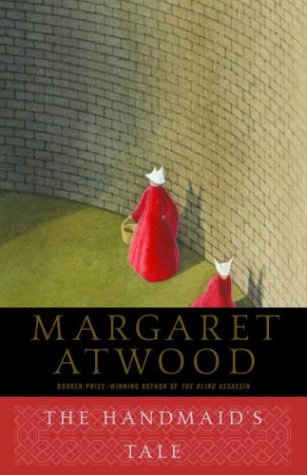
A book like The Handmaid’s Tale talks about human rights, religion, and the role of women in society. It was published in 1985.


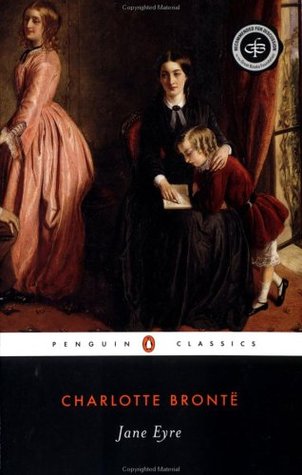
But then you’ve got Jane Eyre. It talks about individuality and duty, religion, and the role of women in society. It was published in 1847.


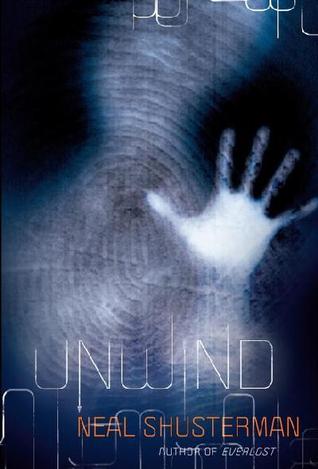
And then you’ve got The Unwind Dystology. The last book just came out, but Unwind came out in 2007. And it talks about human rights (especially to one’s own body), religion, and the role—no, the power—of teens in society. And the nice thing is, Neal Shusterman writes about the girls and the guys (so in a way, he’s just saying that the role of women is up-close-and-personal with that of men).


via Goodreads
(Also, I talked about women’s role in fiction a few weeks ago, so look at me following up on my own ideas.)

Every book brings something, and the books that last tell us is that writing is full of incredible meaning and power. A writer will never cease to write until a point that matters has been made, and well made at that.

It isn’t enough, though. Not for me.

Yeah, I like books that are symbolic (blatantly so, because that’s not my forte) and have thematic elements. Sure, sometimes it’s necessary we use these ideas so that everyone understands our point.

via Goodreads
Other times, I think authors can write the heart out of a good book—they’ll talk about life and its meaning
and our purpose and mankind, and then they’ll forget to give the story a soul.

The soul of a book is imperative for it to resonate with me, more than I can say in words.

Part of the reason that I love Neal Shusterman is that I feel what he wants me to feel. I know what those kids feel. I’ve never been that desperate, and I have never once thought my parents would think my life worth more in a divided state than whole. But I feel and know that anger, that resentment, the grief of the betrayal and the shame that comes with it all.

Like that, but with every book. My reaction. The memory. The feeling when you’re laying on your bed at
via Goodreads
three in the morning with tears in your eyes and a pit of despair in your heart—but just enough hope to see you through ‘til the morning. There’s joy and pain. Not too much, but enough. There’s a soul in books, that makes you remember them and makes you believe that this isn’t fiction at all—this is real life.

And like Elie Wiesel said, “Some stories are true that never happened.”

More than anything, books are a relationship. A contract, if you will, between the writer and reader.

We never read alone.

That is, unless the book doesn’t have a soul. And I think soul is different for every person. I didn’t have much a feel for "Fences" by August Wilson. I do not think I’m going to rush to read a book by William Manchester in a hurry. And I got bored reading The Hunger Games.

I was bored, but other people fell in love. Our taste in souls varies from person to person. It’s amazing.

Yes, we’re good at tackling the important stuff, the fragments imbued with meaning. Bring it to life and making it last? Well, we all need something to strive for.

Flickr Credit: Aaron Moraes

What do you think is written well, or poorly? And, if you’re in the blog chain, drop your link so I don’t forget to come by on your day!


Be sure to check out the rest of the chain!

5th While I Should Be Doing Precal

6thJasper Lindell's Other Blog

7thThe Upstairs Archives and Against the Shadows

8thMiriam Joy Writes

9thThe Ramblings of Aravis

10thSometimes I'm a Story

11th – Kira Budge: Author

12th – The Little Engine That Couldn't

13th – http://maralaurey.wordpress.com/

14th – http://dynamicramblings.wordpress.com/

15th – literallylovely

16thHorse Feathers

17thJulia the Writer Girl

18thButterflies of the Imagination

19thGalloping Free

20thalwaysopinionatedgirl

21st – https://deborahrocheleau.wordpress.com/

22ndThe Road Goes On

23rdClockwork Desires

24th – https://introspectioncreative.wordpress.com/

25thHi.

26thA Note From the Nerd

27thInsanity, Inc.

28thUnikke Lyfe

29th – http://teenscanwritetoo.wordpress.com/ (We’ll announce the topic for next month’s chain.)

Thursday, January 15, 2015

The Glow from the Silver Screen

Hello, dear Reader. Before we begin my semi-monthly essay on Life, the Universe, and Everything, I'd like you to go over to this link (opens in a different tab) and listen to this song. It's about 11 minutes, but it helps you better understand the topic I will discuss. You don't have to listen, but you should. It probably won't make sense, but after this post it will.

*     *     *

Last year (by that I mean my sophomore year), I became obsessed with what the genre-ists refer to as noir fiction. The "hard-boiled", crime detective novels from the 1930s, classic movies from Hollywood's Golden Era, with tough-talkin' detectives with trench coats and square jaws, like Humphrey Bogart and Peter Lorre!

Crime noir is a weird genre. The dialogue is very different than what you might expect. It's very sparse, like Hemingway, but it's vivid, lurid and lusty (as lusty as 1930s standards can get you. It's all good, though.) Consider the first sentences from my favorite noir novel, The Thin Man:

"I was leaning against the bar in a speakeasy on Fifty-second street, waiting for Nora to finish her Christmas shopping, when a girl got up from the table where she had been sitting with three other people and came over to me. She was small and blonde, and whether you looked at her face or her body in powder-blue sports clothes, the result was satisfactory. "Aren't you Nick Charles?" she asked.
I said: "Yes".
She held out her hand. "Dorothy Wynant. You don't remember me, but you ought to remember my father Clyde Wynant. You-"

Reading crime fiction, especially by the two masters of the genre, Raymond Chandler (who's best known for The Big Sleep and his Phil Marlowe stories) and Dashiell Hammett (who wrote the above novel, The Thin Man, and perhaps the most evocative of them all: The Maltese Falcon.) Everyone knows about these two, and people usually enjoy Chandler's stories more. But I'm a Hammett fan and I always will be. Chandler portrays the pointlessness of it all, the hard rugged life, and Hammett does too, but he makes it more witty and glamorous. Not too much, though. But The Thin Man, for example, has characters going in and out of speakeasies faster than you can turn the page.

Hammett does a good job of recreating the stereotypes and fantasies we have of the era. You watch Casablanca, The Maltese Falcon, His Girl Friday, all these great classic Golden-Age films with the greats: Douglas Fairbanks, Clark Gable, Maureen O'Sullivan, Lauren Bacall (who just died last year), Ingrid Bergman...If you're like me, you want to enter the fantasy. You want to become a Prohibition era detective, like Hammett's "blond satan" Sam Spade, who's always digging for the truth, if you'll pardon the pun, or or a sweet dame who's in a spot of trouble but turns out to be a traitorous beauty, like Brigid O'Shaughnessy.

*     *     *

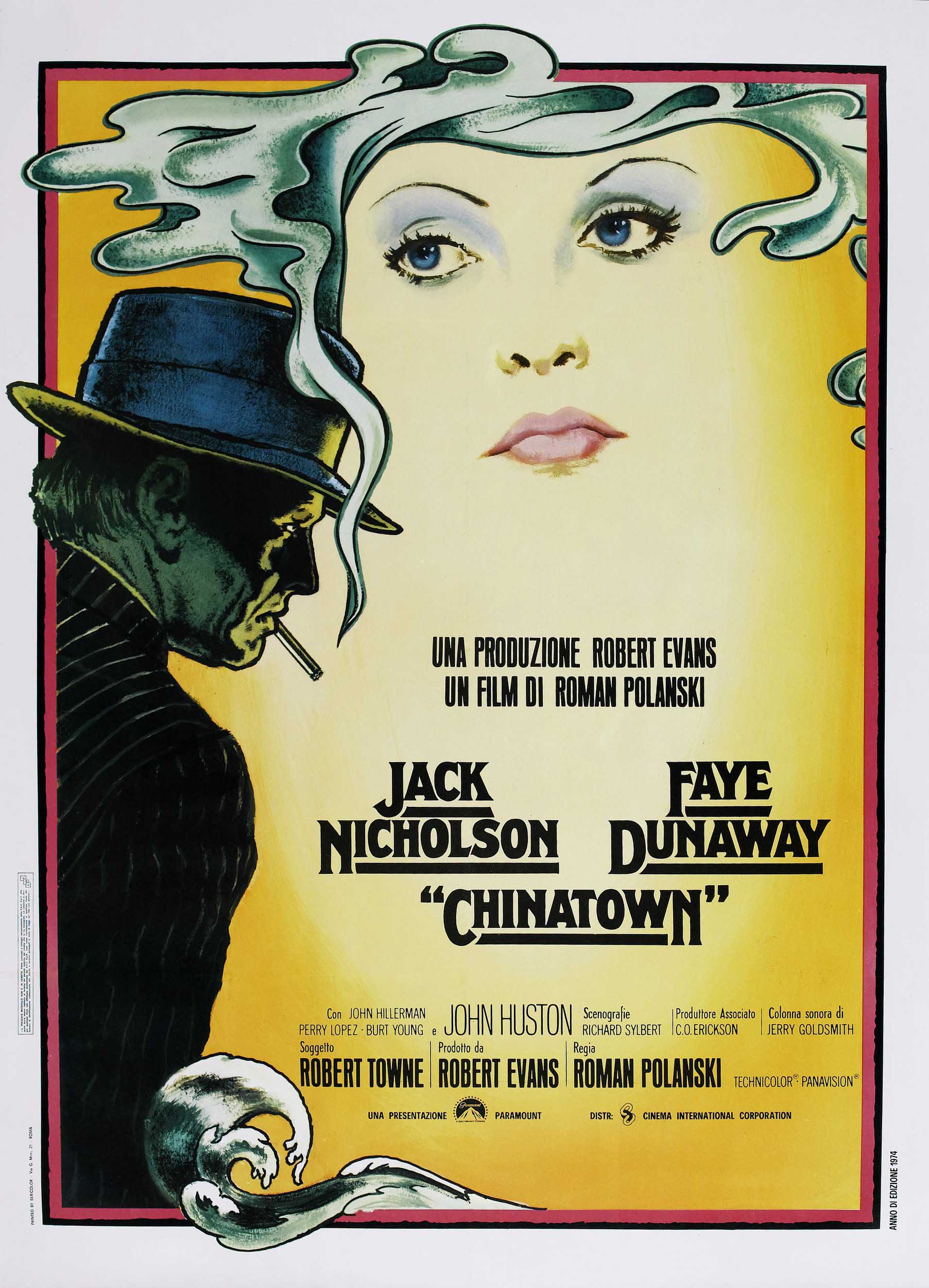
The film poster to the right looks like something from the '30s, am I right? Nope. The movie was made in 1974. It is perhaps one of my favorite movies, not just about gangsters and detectives, but of all time. I mentioned before how I really didn't focus on the pointlessness and despair of crime noir, but Chinatown does an excellent job of showing it to people. The life of Detective Gittes is hard, from tracking down murderers to dealing with dead people and an unstable woman. In the end, nothing matters: justice can never be served but with blood and revenge. "Forget it, Jake. It's Chinatown."
 
The point is this: crime noir gets to show us two sides of an era: the glitzy, svelte allure of speakeasies and Humphrey Bogart, and the harsh, rough and tumble lifestyle of Jack Nicholson getting his nose slashed up.
 
Overall, crime noir is a good genre if you enjoy history and classic movies, and gangsters, and trench coats. As I said before, it's a hard genre to get into. There's codes and jargon for everything. It was a hard life to live back then, and sparse dialogue and snappy comebacks are a result of that. (As was heavy drinking and excessive smoking, but that's neither here nor there.) XD
 
*     *     *
 
The song I had you listen to was full of sound clips from The Maltese Falcon, starring Humphrey Bogart. There were numerous other references to silent-era films and Golden Age greats. Yes, it may have seemed odd and confusing. The song is a good one, though, especially the ending: the ending shows how movies are powerful. If you've seen Hugo Cabret, you know this: the fantasies and delusions of actors on the silver screen are inspiring. We go to the movies for release, to see characters who may be like ourselves, or ones who live completely different lives than our own. We go to the movies to indulge our curiosity, to experience the thrill of seeing scenes that make us go "What if?" What if we met our lifetime love on the Titanic? What if we were all connected to a computer matrix mainframe? What if we were silent-era movie actors who were replaced by the "talkies"?
 
Movies are amazing things. They really are. Like books, they can show us so much more than what we know, take us to worlds afar. This is what is so amazing about media.
 
Fantasy would fill my life, and I love fantasy so much...
 
-R.R.


Tuesday, January 6, 2015

The Problem with Literary Ladies

I am not quite a literature junkie. I’ll read it for school, and maybe even pick up a recommended novel, but literature is a tricky thing to read, especially when you want to read about girls.

I usually read regular old not-literature novels—and in terms of female characters, I’m a lot happier with the spread I read. I get girls who are fighters and diplomats and complex and dynamic in positions of respect and power.

I struggle with literature because more often than not, this is not the case.

As I just said, I’m not a literature junkie, but I’ve done a little research and dug out a few titles to support my point. They're either ones I've either read or recognize—and I am by no means an expert, which means you are welcome to challenge me. But in what I've read, I notice a few things.

Flickr Credit: r8r

Women face SO MUCH OPPRESION (socially… economically… politically… religiously…)


The Awakening—Edna Pontellier cannot self-actualize or be with the man she loves because societal standards say she must stay at home and be there for her husband and kids.

A Handmaid’s Tale—Offred is the possession of others and is basically an object kept for her reproduction value alone.

Pride and Prejudice—some idiot based his financial security and retirement on having a son, which didn’t happen, which means that in order to guarantee future security the Bennett sisters must marry because they are inadequate economic heirs.

The Scarlet Letter—Hester is publicly humiliated and despised because of her adultery and her baby daddy’s anonymity, and faces the threat of having her daughter taken away from her, and is only ever remembered as an adulterous instead of a really good seamstress and decent human being.

Jane Eyre—Jane longs for liberty and morality at the same time but by nature of those things the way she wants her life to work out doesn’t always; also, many people like her aunt and school and boyfriends try to take away her liberty, which is also a problem.

(Okay, I still love Jane Eyre, and it’s a decent struggle. But if we look at the group, it’s still a pattern.)

Flickr Credit: Pedro Ribeiro Simões

Or their own story is overshadowed


To Kill a Mockingbird—to be fair, there are some other ladies in this book, but the real story is about Atticus and Tom Robinson and Boo Radley; Scout isn’t exactly her own protagonist.

Flickr Credit: janwillemsen

Women sometimes don’t even feature in literature, or their presence wouldn’t pass the Bechdel test.


Lord of the Rings—Gladriel, Arwen, and Éowyn are the main female characters (not that Lobelia Sackville-Baggins doesn’t count) and none of them ever meet; it’s a story almost exclusively about guys.

Lord of the Flies—a group of boys on an island; no girls exist.

Of Mice and Men—if I recall correctly, there is only one female character, Curley’s wife (she doesn’t even get a name), who “exists as a symbol of temptation to Lennie.” She dies.

The Name of the Rose—takes place in a medieval monastery, the only girl is also nameless and the love interest of the narrator. In the movie the cracks against women made me want to punch the screen. Ugh.

Flickr Credit: Boston Public Library

Even if they do pass the Bechdel test it doesn’t indicate that the women are particularly well-written or complex.


Catcher in the Rye—there’s a conversation between Phoebe and her mom that allows this book to pass the test; all the same, the fact that it’s the only example of female bonding (even though Holden goes to a boy’s school and spends a lot of time alone, blah, blah, blah) doesn’t exactly redeem the story.

The Invisible Man—there were a few women in the story, I guess, it’s just that they didn’t get much attention. Just homemakers, proprietors of rooms to rent, plot devices. There’s nothing memorable about them.

Flickr Credit: Adam Mulligan

I haven’t read any of the following books, nor looked them up—but I can tell you what I know of their reputations. 


Moby-Dick—the actions of a vengeful [male] captain (Quigley? I can’t remember if that’s from Sherman’s Lagoon or not) result in a dead white [male] whale .

Don Quixote—a would-be [male] knight and his short and useful [male] friend go about trying to be chivalrous in Spain.

Frankenstein—a [male] doctor creates a [male] monster with his [male] henchman, Fritz or Igor or something. BUT I do recall that Dr. Frankenstein has a fiancé, who I think dies.

The Strange Case of Dr. Jekyll and Mr. Hyde—I’ve seen the musical, and there are like three girls (not counting other prostitutes) that don’t pass the Bechdel test (I think?) BUT in terms of what I know about the book another [male] doctor tries to mess with the forces of good and evil and makes another [male] monster that kills many people. Most of them are male.

The Old Man and the Sea—well, there’s a male old man. I seem to recall he gets baptized or is a Christ figure, some kind of religious significance. And possibly there is a male boy.

~*~*~

DO YOU KNOW HOW DEPRESSING THIS LIST MAKES ME? Sure, they have literary merit. Sure, they say a lot about the human condition. And sure, they’re probably not the books that everyone is going to pick up.

It’s just that they do have reputation and respect, and if the question in literature is “should we write women who bond under the chains of repression or women who do nothing at all?” THAT IS NOT THE RIGHT QUESTION.

And that is my problem with literature.

To compare, these are the books that sit on my Favorite Bookshelf, the majority of which are MG/YA novels. The number in parenthesis indicates the number of books in a series that I own.

This is the key:


* Female Protagonist
* Plot-significant female secondary characters
* Passes the Bechdel Test
* 3+ Female Characters
* Female Bonding Present

And these are the stats:


The Grisha Trilogy (2) *****
Artemis Fowl (10) ****
Ranger’s Apprentice (12) ****
The Scarlet Trilogy (2) *****
The Princess Bride **
The Pandora Series (3) *****
The Outsiders *
The Odyssey **
To Kill a Mockingbird *****
The Ever-Expanding Universe Trilogy (2) *****
The Lunar Chronicles (2) *****
The Twilight Saga (5) *****
The Things They Carried *
The Unwind Dystology (4) *****
Earthfall **
The H.I.V.E. Series (10) ****
The Importance of Being Earnest ****

Basically, literature has a lot to answer for. Maybe they want to describe what it’s like, and showcase what life is for women, but I think what is nice about novels is that they describe the way it should be.

And guys should not be the only ones who get to screw up big time in literature.

Flickr credit: Laura

What do you think? Do women receive enough attention in literature? Or, do you have any examples to show that there's a better side of literature I haven't found yet?

Tuesday, December 2, 2014

To His Coy Mistress: A Matter of Perspective

Europeana Credit: London Science Museum
This is going to be hard and fast: we just read this poem in English today, and there’s only twenty minutes left before I have to go to lunch.

 The poem’s called “To His Coy Mistress,” by Andrew Marvell, and you should go read it, because it’s funny. It’ll give you context as to what I’m going to talk about, but it’s not actually what I’m going to talk about.

 See, I wouldn’t have enjoyed this poem a few years ago. I remember in my Freshman English class, reading Romeo and Juliet and being—not offended, I think, but kind of peeved that there seemed to be so many references to sex and I didn’t think they were funny or clever or anything.

 It is likely that little Heather who kept the more recent update from expecting to enjoy Othello when she had to read that two months ago.

 But I realized something then, as Othello and Iago and company started dropping their little innuendos.

 It was FUNNY.

 “I’ve been told wrong,” I thought, horrified. “Shakespeare can’t be boring if he’s actually funny.”

 It was a startling realization. But even more startling, as I read this poem and another, comparing their lusty advances on virgins, insisting that, hey, we don’t have all the time in the world so let’s jump to the part about sex—I realized that younger Heather wouldn’t have even given this stuff a chance.

 I don’t think it came from the way I was raised (other realizations about things have come even within my own house) or my lack of a sense of humor: I’m pretty sure it was there. I blame middle school. Sex was something that you whispered about and giggled and lolololol SEX.

 And I’m not saying that we don’t still say those things in English class nowadays, a handful of years later. The difference is: we say it out loud. These two guys, brilliant each in their own right, had very loud interpretations of the coy mistress’s lover, and they were funny.

 The social norm has changed. It’s not bad—literature is pretty much affairs and murder and saying something about the human condition, so we have to be able to talk about it. But it is different.

 While I’m glad I retained some innocence as a Freshman, I also wonder what she would have thought as I hastily scribbled the last part of the assignment on the back of my worksheet: explain what your favorite poem was and why.

 I liked “To His Coy Mistress,” because even though the speaker is a condescending bastard, it’s clever. And I liked the Biblical allusion to describe time.


 I guess, you could say, it’s a matter of perspective.

Tuesday, November 11, 2014

Surprize & Discovery in 1807 England

Today's topic was inspired by two truly marvelous stories: Susanna Clarke's Jonathan Strange & Mr Norrelland the 2003 movie Master and Commander: The Far Side of the WorldBoth are set in roughly the same era: the latter in 1805 and the former begins in 1807. All three deal with England during the Napoleonic Wars (hence the title).

England during this time was in the middle of a very feisty and contentious war with France. It was also an exciting time in History: there was America's Ograbme, impressments, Ali Pasha taking over Egypt, the international slave trade ending...It was definitely a time of great change, excitement, surprize (I use the archaic spelling) and, of course, most importantly - discovery.

Russell Crowe as Captain "Lucky" Jack Aubrey.
Photo Credit: weebly.com
For the unaware, Master and Commander is, put quite simply, the story of a British ship, the Surprize, trying to destroy its French enemy, the Acheron. But it is so much more than that! It is a wonderful movie, especially if you appreciate the time period and context in which it takes place. There is no Jane Austen and her Mr. Darcy here - rather, a rough, but playful, exciting, but sobering account of war and discovery on the high seas.

Jonathan Strange & Mr Norrell, on the other hand, is slightly different. By slightly, I mean alternate-history slightly. In an alternate England, magic was alive and well until the 1600s - when the Raven King and the Aureate magicians disappeared. Everyone knew the history of magic - but none knew how to conjure it - until Mr Norrell, and later, his wayward disciple, Jonathan Strange come along during the Napoleonic Wars, and bring magic back to Britain.

Both of these have a main element of discovery among them - but also showcase its effects quite well: the benefits, the joy, and the dangers resulting from curiosity.

*      *       *
Discovery, of any kind, is always exciting and slightly shocking, by definition. To look upon or learn something that was never seen or known before is humbling, and yet there is a certain thrill about it. From discovering a new element, to naming a new species, to reading a previously unknown letter by someone famous, to unearthing a new artefact, to proving a new theorem - all provide a great sense of either hope or terror. Because, for every cure for polio or smallpox, there was also the discovery of Ebola and how to create an atomic bomb. For every discovery of America, there was also a great genocide and mass murder of countless innocent people. For as humans, we have been entrusted with the greatest gift of all: curiosity. But as humans, we also have a sadly notorious proclivity for using that curiosity for horrifying things. Keep this in mind.

*      *      *
Mr. Norrell, the
greatest magician of the Age.
Photo Credit: fantasybookreview.co.uk
In Jonathan Strange & Mr Norrell, the peaceful naivete of Mr Norrell and Jonathan Strange, bravely trying to use Magic for good, is upturned when Strange is interested in the darker, more dangerous arts, and tries to use magic for these. For me, this is like to nuclear power. The possibilities of nuclear power, when first discovered, are endless, and amazing - virtually limitless power from a few radioactive metals and fission! But then came the atomic bomb. Chernobyl. Three Mile Island. Today, we live in a nuclear age. The days when schoolchildren were taught how to hide from an A-bomb are thankfully gone, but the spectre of attack still lies heavy over our heads. Such is human nature. But don't think I'm entirely cynical...

*      *      *
One of the most telling scenes in Master and Commander takes place when the Surprise first arrives at the Galapagos Islands, between young Lord Blakeney and Dr. Maturin:

Maturin: Here's an insect that's taken on the shape of a thorn to save itself from the birds.
Blakeney: Did God make them change?   
Maturin: Does God make them change? Yes, certainly. But do they also change themselves?  Now that is a question, isn't it?


There is a perfect reconciliation of science and faith here. Often these two are at bitter odds - which is correct? Which explains Life, the Universe, and Everything? As for me, I maintain that they are two different ways to explain the same thing - for me, God is equivalent to the Universe, Creation is the Big Bang, science is equal to faith, and a rosary is equivalent to a microscope. They are all one and the same.

*      *      *
Mr Norrell is a most secretive person. He is narcissistic, in a way - he wants to be known as the only magician in England, and while he and Jonathan Strange become good friends, they eventually become opposing magicians. This is partly due to Mr Norrell himself - the old "hero creates his enemy" prophecy-trope.
You see, Mr Norrell owns every single book of magic in England. When magic was unknown he was able to purchase every one rather quietly and on the down-low, but when magic became respectable and fashionable, everyone was on the lookout. However, Mr Norrell was able to get to every single one - spending up to 2100 guineas on one rare book. He did this to hide information - in short, to ensure he was in control of knowledge. (Shades of 1984 here...) This is partly why Jonathan Strange went his own way, away from Mr Norrell - unable to read the great books of magic which Norrell hid, he felt there was more to knowledge and set out to discover more. Strange is in the right here, partly. To me, Norrell represents the old, traditional order - trying to keep stability and a semblance of right and wrong which has stayed in place for centuries. But Strange is the young discoverer - the pioneer, as it were. He represents discovery, science, and progress. He is to bring the world forward in terms of Magic - but, of course, there are many dangers in wait for him. (Does he succeed? Well...you'll have to read the novel to find out.)

*      *      *
Part of the main plot of Master and Commander is the promise Captain Aubrey makes to Dr. Maturin - to spend time to explore the Galapagos Islands and make naturalistic discoveries, particularly that of a flightless cormorant. However, Maturin's hopes are dashed three times - all due to the Acheron being nearby. At one point, Aubrey is all set to sail away and capture the Acheron, but Maturin wants to stay behind, studying all the new animals.
To discover new species! It must be so exciting and tremendous, the act of being the first human to look upon a certain animal, or at least to name it and study its evolutionary traits. Maturin surely felt this way, and I'm sure the other great naturalists - Darwin on the Beagle, Linnaeus and his taxonomic organization - felt this way. However, again - progress and stability clash again when Maturin petitions Aubrey to stay behind.
Dr. Maturin: Jack, have you forgotten your promise?
Capt. Aubrey: Subject to the requirements of the service. I cannot delay for the sake of an iguana or a giant peccary. Fascinating, no doubt, but of no immediate application.
Dr. Maturin: There is, I think, an opportunity here to serve both our purposes...I could make discoveries that could advance our knowledge of natural history.
Capt. Aubrey: If wind and tide had been against us, I should have said yes. They're not. I'm obliged to say no.
Dr. Maturin: Oh, I see. So after all this time in your service, I must simply content myself to...hurry past wonders, bent on destruction. I say nothing of the corruption of power...
Paul Bettany and Russell Crowe as
Dr. Stephen Maturin and Captain Aubrey.
Photo Credit: weebly.com
Capt. Aubrey: You forget yourself, Doctor.
Dr. Maturin: No, Jack, no. You've forgotten yourself. For my part, I look upon a promise as binding. The promise was conditional.
Capt. Aubrey: We do not have time for your damned hobbies, sir!
Bear in mind, Aubrey and Maturin are friends. However, sadly, this is what happens when progress and stability - the stability of the Empire - takes place. I might be reading too much into this, but in a way it's the same argument betwixt Jonathan Strange and Mr Norrell.

*      *      *
I hope you'll apologize for the strange way this blogpost was written - a series of vignettes, all slightly disconnected, is hardly the best way to go about writing. It's a bad habit I have gotten in. But I hope this was helpful. If anything, it's a polemic on human nature & discovery - and the outcomes they create when combined. Dwell on that, won't you?

Khodafez.
-R.R.

Tuesday, September 9, 2014

How I Rate Books—And Why it Matters


Flickr Credit: GSFC

2009, Rick Riordan publishes The Last Olympian, and I’m like, in seventh or eighth grade. I read it, and I love it, and I scribble it on my reading log in nearly indecipherable script. (De veras, I never realized how much my handwriting has changed in the last half-decade until I saw what a mess my writing used to be.)

Now, there was this 1-4 star scale on the Reading Log, which I actually attempted the first month I used it. Then I read The Maze of Bones, also by Rick Riordan, and gave it a 10. The Hunger Games got 150, North! Or Be Eaten got 2 million, Airhead got 11 million, Pandora of Athens got “like a gazillion,” The Emperor’s Code got a “centillion,” and The Lightning Thief and almost all subsequent books got infinity.

Then came The Last Olympian, and my poor little heart was filled with too much joy for infinity, so I’m sure you can guess what I rated it—“more than infinity.”

Yes, I still have those records.

What my 2009 self did not realize was that while infinity was very complementary towards Mr. Riordan’s books, I was completely devaluing every other book on my scale. Yeah, compared to a score of 2 (which I gave to Lord of the Flies) 2 million is a lovely score, but when you get up to 11 million and from there “more than infinity,” that’s not complementary at all!

As highly as I wanted to praise these books, I could only do so by shaming other books I’d read—some of which I truly loved.

When rating books, or anything, there always has to be a set scale. Amazon has a five-star scale, as does Facebook. IMDb uses a score out of ten, and Rotten Tomatoes gives a percentage out of 100. All things considered, each of these scales could be standardized to all match, and technically nothing would change, but I find that would take away some individuality, as well.

So where does that leave us? When creating a scale, we need three things:

1) Standardization—there must be a scale of some sort to encourage fair and easy comparisons, which will also demand specificity from the rater.

2) Simplicity—Infinity is a bad scale to go up to. It’s also hard to rate value based on electron content or whether it can pass rites of fire in your backyard. Make it easy to understand and easy to replicate, if necessary.

3) Individuality—What does each star (or number) mean? Is it like in school, where a 75% equals passing? Or as with Amazon, does 1 mean “I hated it,” 3 mean “I liked it,” and 5 mean “I loved it”? Will you choose an even scale, that demands choosing a side, or will you allow some gray area? How does this scale represent you, and what you believe about the content you’re reviewing?

Nowadays, I’m going on a five-star scale with a bonus question. It serves my purposes as a reader and watcher of movies, and it allows me to truly honor the media I love in reviews, and make sure I know what I want to return to.

Here’s what it looks like for books:

5—An amazing book, which I love and will remember fondly for years to come. Usually I identify with the characters, enjoy the plot, and admire the author’s choices for the text.

4—A good book, which is fun and interesting. It has good characters, a good plot, and there’s nothing wrong with it. It is simply a darn good book and I will enjoy rereading it.

3—An okay book, which was worth the read but imperfect. Maybe it wasn’t realistic, maybe it’s not my genre, maybe the plot was holey. I’d read it again, but I wouldn’t cry if I accidentally dropped it in the bathtub or something.

2—A poor book, which could have all sorts of problems, but isn’t completely past redemption. I’d reread it… probably.

1—Not worth reading again or I couldn’t finish it. Some books simply do not interest me or are so poorly written I can’t bother to see them through.

However, on my current reading logs, I don’t actually use this star system! That’s only for reviews on my other blog, Sometimes I’m a Story. When I’m putting books in my spreadsheet, I take into account one question:

Would I Read This Book Again?

To be willing to read a book again and again is, quite honestly, the highest praise I could ever give. If the answer is yes and I get stuck with varying degrees of quality, so be it. But I’ll save myself from the one-star books, and that is plenty for me.

What about you? How do you rate books? How does your system differ from mine?

Flickr Credit: Gabriel Lima

Monday, August 11, 2014

The Superficiality of Life (feat. T.S. Eliot)

Let me make this clear: I love poetry. It's elegant, it's beautiful, and it has a wonderful way of resonating within me, whether it be Stephen Crane's intellectual paradoxes, or Robert Browning's blithe celebrations of life and nature. I collect volumes of poetry. I have been published in several anthologies. But despite all of this, my favorite poem is an odd one, an eclectic riddle of modernism, a musing upon the shallowness and emptiness of life. I am talking, of course, of T.S. Eliot's The Love Song of J. Alfred Prufrock.

"Let us go then, you and I,
As the evening spreads across the sky
Like a patient etherized upon a table..."

I am not going to analyse and explain this poem line by line. There are a great many number of websites that do so already. I am only going to point out three quotes from the poem. But of course, you should read it first! A link to the whole poem is here.

 Rather, I am going to explain Eliot's poem and connect it to my life, because the modern teenager's life is very, very similar to this poem. At least mine is. And I'm sure many others, as well.

In this masterwork, Eliot's first step through the door of literary celebration (and criticism), a middle-aged, crisis laden fellow named Prufrock worries about a whole host of things. Should he go out? What if people notice he is bald and thin? Does he dare eat a peach? (Yes, a peach.)

Teenagers (and, I could argue, today's appearance-based society) are just like Prufrock. Does this shirt make me look fat? What would the guys at work think of this tie? Should I pig out and forget my Paleo Diet? (No offense to anyone doing the Paleo Diet.) But we spend a great deal of our lives wondering about how others perceive us, and the possible aftereffects and repercussions. This isn't necessary a bad thing, but it is a waste. We only live once, you know. Our life is limited on this earth, and worrying about that new dress isn't helping matters. I'm not saying to entirely live carefree, rather that needless, "shallow" worrying is pointless.

Let's move on:

"In the room the women come and go
Talking of Michelangelo."


I bring up this line, the "chorus", of sorts, of the poem, because of its implied superficiality. Women just happening to walk around and talk about a 16th-century sculptor? Something doesn't ring right...

I'm the first to admit it, but I can be an intellectual dilettante. I can talk to you about David Foster Wallace and his contributions to postmodernism, but I have never read a single word of Infinite Jest. (Don't worry. What I discuss on this blog I have entirely researched, read, and studied meticulously. There is a time and place for dilettantism.)


I hang out with the "smart" crowd at school, of sorts. I'm 9th in my class. My best friend is first in our year. My other close friends and acquaintances make up the most of the top 50. Little wonder, then, that we all try to outshine ourselves in class, or in conversation, to be perceived and hailed as the greatest intellectual. (I currently "battle" with my best friend in this regard.) But this is exactly what I am talking about. We can jaw and talk about long-dead people or how to solve that tough calculus problem, but in the end, does it really matter? Or is it all just superficial talk? (Don't get me wrong, I love learning new things and talking about them. But there becomes a point where it all is just for show. Is that right?)

Moving on to the last one:

For I have known them all already, known them all:
Have known the evenings, mornings, afternoons,
I have measured out my life with coffee spoons.


Measuring out his life with coffee spoons...this is perhaps one of the most intriguing lines in all of poetry. I love this line: the pure sweetness of it, like candy: it's catchy, it's whimsical. This is what I love most in poetry: the whimsy inside wonder.

Back to the poem: one interpretation of that line says that since coffee was the social drink du jour (as it is today: Starbucks, anyone?), Prufrock bolstered the claims to his superficiality by measuring his life by the number of social gatherings he had been to: in short, the number of times he had been served coffee, or spun sugar in it with a coffee spoon.

Doesn't that sound like today? Facebook, and other social media sites, have done this. We, as a society, have largely measured ourselves by the number of friends we have, or the number of likes a post we made has. We compare ourselves to others, who may have grossly increased their friend count, and set a standard by it. But friends should not be reduced to a number: it's quality, not quantity. How many of the 600 Facebook Friends or Twitter followers would jump into a burning building for you? How many of the 50 "likes" on that post this morning would "like" you if you were to do something not necessarily condoned by society?

Eliot, in all these examples, has shown, and poked fun at, the superficiality in his society (1915 England). But 99 years later from the original publication, the same worries still apply. Interesting, isn't it?

As I have shown above, Eliot's poem lends itself to many different interpretations and explanations. Mine is just one offering, one plausible explanation that may not even have crossed the poet's mind as he wrote it. But I hope you understood the point I was trying to make:

Poetry is beautifully intricate and complex. Read it with enthusiasm, and you may well marvel in wonder at the power of words.

Khodafez.

-R.R.