Showing posts with label Journaling. Show all posts

Wednesday, May 27, 2015

Laughter

19


Hi. I’m still alive, although it’s been three weeks since my grandma died.

It was the week the rain started—the week that began the huge downpour that has flooded my basement and also my life. I knew better than to walk home in the rain (although that’s another story), so I borrowed a phone to call home.

Dad picked up. Dad has a nine to five job—it was two. I think that’s when I knew, but he didn’t say anything. Mom didn’t say anything when she picked me up, either. Maybe I’m wrong, I thought.

I put my stuff down, and that’s when Dad told me. “I’m home early, because Grandma Twila died this morning.”

“When?” I asked.

“Around ten this morning.”

I nodded, and kept putting my things away. “Okay.” Maybe it seems heartless, not to burst into tears, or to start crying, or anything—but for me, it felt like I had lost my grandma a long time ago, and this was just the end of a long time coming.

“Are you making grilled cheese sandwiches?” I asked, noticing the griddle.

“Yes. Do you want one?”

My mom does most of the cooking at my house, but you don’t say no to a grilled cheese sandwich from my dad. You just don’t. The bread was the crispy butter brown that Dad has seemed to master, complete with pepperoni, ham, and the gooey white goat cheese that knows my heart so well.

So we sat together, and ate grilled cheese sandwiches—I don’t remember what we were talking about, probably things to do (there are a lot of things to do when someone dies) or telling my sisters, but I remember that my friend Emma came up as I told my parents her story.

Last night, she was in her room and saw an enormous spider—and then she lost track of it. Like any sane person, she ran up to her parents’ room and said, “We need to burn my room down, there’s a spider!” (My parents laughed here.) Her mom, half-asleep and hardly paying attention, put her head up and said, “Thou shalt not kill.” Even funnier to my parents was that she couldn’t remember the episode the next morning.

Today the sun came out again. I live in a place proclaiming 300 days of sun a year, and I was starting to worry—rain used to be beautiful because it was so rare, but after twenty days of stifling wet weather, early mornings vacuuming up water in the basement, and legs frozen by the weather, it’s become more of a nuisance.

But today the sun came out. Life goes on. You sometimes have to do the things you don’t want to do, and sometimes that means writing this blog post, or preparing to get back to editing a novel I’ve lost track of again.

And sometimes it means laughing over grilled cheese sandwiches with my parents, and knowing that a woman who was with us isn’t here anymore. And that it’s okay. And that there are still chances to smile in the rain.

Friday, April 24, 2015

Poetry

18

When did I first hear the first word of poetry?

I can remember sitting in a lap that was bigger then, and there was a man who wrote all the best books about one fish and two fish, Mr. Brown who moos, tweetle-beetle battles, and oh, the places you’ll go.

I can remember third grade, when we had our poetry unit. I wrote limericks, haikus, open form, other things. I can remember sharing my poetry book with my family, and my mom cried when she read what I wrote about my friend who had moved away.

My grandfather is a poet. I’ve read his poems on warm sunny days in a room painted with the brightness of a smile. There was something about that day last summer—and I don’t know if it was the softness of the cotton comforter gluing me to the eons or the fact that I’ve touched the hand that wrote the words, and it’s different.

We study poetry in my Lit class now. There are items like SOAPSTTone and lit devices, meter, sound devices, structure, more. Little pieces that are confusing and intricate but as juicy as worms dug out in the backyard. Maybe not beautiful but still good.

And when did I hear poetry?

It’s one thing to watch Dead Poets Society or Four Weddings and a Funeral and smile and cry because it’s poetry and God it’s good.

But it’s another—entirely another—to stand up to the sun and shout, “THIS IS POETRY!” so that it knows to shine extra-brightly. And when did I first start shouting?

Perhaps I’ll never know.

Thursday, April 2, 2015

Home

13


It’s Maundy Thursday. Well, it is for another hour.

We’ve always gone to Maundy Thursday service, as long as I can remember. I can remember once at my old church there was a night where we set up tables in the sanctuary and we all had our own little last suppers and there were plastic wine glasses I enjoyed the heck out of.

Tonight was good, too. We sang, we listened, and we had communion.

I like communion. I like the idea that we all come together. I like that everyone is welcome at the table. And I like that traditions aren’t always set in stone.

You always hear the words of institution: “Our Lord Jesus Christ, on the night when he was betrayed, took the bread, and when he had given thanks, he broke it and gave it to his disciples and said, Take; eat; this is my body which is given for you. Do this in remembrance of me. In the same way he also took the cup after the supper, and when he had given thanks, he gave it to them saying, Drink of it, all of you. This cup is the New Testament in my blood, shed for you for the forgiveness of sins. Do this, as often as you drink it, in remembrance of me.”

I’ve probably heard that probably about a thousand times since I was born (more or less).

But I never did it in a circle. We never did it all together.

Despite our lack of practice we were all put in a circle around the sanctuary, and tasked with giving each other communion in a big circle. And circles are hard for us, I suppose, so it took a while. But we shared the food, and we sang.

Were you there when they crucified my Lord?

We prayed together, holding hands in that big circle-y square, booming the Lord’s Prayer while the snow slushed outside. It was the sort of circle that made you think, “This is what home feels like.”

We prayed, we sat, we waited. And then they came to strip the altar.

I never thought about it much before—it’s traditional, they’ve done it at every church I’ve been to. You take down the candles, the cloth, the books, the symbols. They pass everything down from the altar and all that is left is a naked slab of wood and we stare at it.

Except it’s not really the altar being stripped, is it. It’s Him. No clothes, no pride, nothing to hide behind, nothing to protect himself. Naked, alone, betrayed, and abandoned. And I hated looking at that altar—because why would someone submit to that shame? Why would anyone want that kind of sacrifice, when nothing could make it better again?

But in that building, with those people, with the candles and the memories and the certainty that’s never really certain… I also knew exactly why he did it.

He did it for home.

He did it for us.

Wednesday, March 25, 2015

Secrets

08

Secrets can mean lots of different things.

In The Addams Family Musical, no one has any secrets, and as soon as they start keeping secrets the entire family just collapses like the Roman Empire.

In Finian’s Rainbow, Susan has a secret—a secret, a secret, she says she has a secret; a secret, a secret, a secret kind of secret! And Woody sings that part really well, by the way, so don’t read it in an ugly voice.

OneRepublic has a song about secrets.

We keep the secrets, we tell the secrets, we have moral problems about whether or not the secrets should be told…

And yet in one way or another, people will either know or not know and secrets are that simple.

I have some secrets. For example, I really like the blog post I am putting on Sometimes I’m a Story on Friday, and no one knows what it is but me.

I also like what I’m doing on April Fool’s Day, although that one I’m a little bit more apprehensive about. There are other secrets, between friends. Because I once did something horrible on April Fool’s Day—and people say I should forgive myself and I have, but forgiveness does not mean forgetfulness. I have the tendency to think that something that may be funny will not be funny at all.

I think it is funny, but then, who knows if it will truly be funny or not. I’m not sure.

Secrets can be silly, but other times secrets are destructive. I do not think my secrets are destructive. But then, sometimes it is hard to tell until the damage has already been done.

Sunday, March 22, 2015

Privacy

06

Alone
Flickr Credit: José María Pérez Nuñez


Privacy is divine.

Privacy is hell.

I'm alone, so there is no one to make sounds and distract me.

I'm alone so I can hear the fridge turn on and nearly crap my pants.

There is no reason to lock the doors because there is no one to walk in on me undressing.

There is every reason to make sure the doors are locked three times because if anyone comes in there will be no one but myself to save me.

Time passes slow and sweet, like honey. I have no need to rush.

Time passes fast and dangit I have no one to remind me when I need to be places I'm totally responsible I can handle this.

Ah, me, myself, and I. Alone at last.

I have not touched the dryer the entire time I have been here help help someone has broken in to do laundry.

I can eat whatever I want!

I totally should not have eaten that.

I can watch whatever I want and no one will judge me!

I can watch whatever I want... Oops.

Oh, thank goodness, it's just the dog.

But what if it isn't just the dog.

The zombie apocalypse could happen outside and I would never know.

The zombie apocalypse could happen in here and no one would ever know. 

I don't understand why the cat likes to cuddle with the cupboards.

I don't understand why the cat likes to cuddle with me if it likes the cupboards so much

I will ask.

Why am I talking to the cat.

I love being alone.

It is hard being alone.

Friday, March 20, 2015

Art

04

Dice
Flickr Credit: Daniel Dionne
Let me tell you what is art.

Art is tigers.

Art is the squiggles in a Halls’ H that make it special, unique, different. And even though it is silly, they all came from the same pan you twit, it tastes better when the grooves scratch the ridges from the surface and make an oval red stone to suck on.

Art is lungs. Even though they are torn and gasping and white from the cough cough cough of scars and movies at midnight, they are art. Little pieces, big job. And they move and you can feel them and watch Lady move up and down as you breathe.

Art is ankle bones.

Art is toenails. Broken, chipped things that are too hard to paint and too precious to slice against a table at Subway in Iowa. Don’t worry, it healed.

Art is when you wish there was less faith and more pennies in a jar to toss at the windows because even if everything wasn’t okay at least there would be no one to blame. No blame, no game, no state of mind, no brain.

Art is dusk.

Art is crumpled papers by the basket in the dark where purple exasperation and bad aim have made a mess on the floor. Art is the woman who cleans them up and takes the plate away—the one from the sandwich she made him.

Art is paneling, and it is ugly and rough and there are thoughts in the paint that tell me I was different then. The yellow is not yellow, it just is.

Art is fear.

Art is the gamble, and love is the reward.


Wednesday, March 18, 2015

Story

02

Writing? Yeah.
Flickr Credit: Caleb Roenigk
I read an account today of visiting a writer's conference.

It makes me uncomfortable just thinking about every visiting one. I get uncomfortable when I let my mom read my own work—what will she think, what will she say, and if I wrote something that doesn't click with our beliefs will she think that it's what I believe, not the character?

And that's kind of the point of a conference. People can take a look at your writing and teach you without being your family and not instilling fears of personal failure in your heart.

But at the same time, I would hate to have to look at someone's face while they read my writing. I don't mind when it's my sister or my best friend—the stuff I show them is exclusive and designed to make them laugh. It isn't real feedback, and I know it. I'm just getting an extra dose of dopamine by accrediting their smiles to my own hard work.

Watching a stranger read my writing would terrify me.

We're reading Ceremony in English right now; Tayo, the Laguna Indian, is trapped with the memories of WWII and the run rises with a story, because stories are sacred, a kind of worship, something that Spider Woman thinks of and delivers through each of us.

Stories are sacred. We can find any kind of use for a story—as a lesson, as a source of entertainment, as toilet paper, a paper hat—but the thing is that stories are also personal. Something I thought of, something I worked on, something I worked on every day for a year because I wanted to make it good and I wanted it to reflect me, in some small way.

There are the writing ideas in all of the folders that I don't touch anymore because I don't want to explore the paths in my soul where those ideas reach.

And there are things that I put down that I want to say, that I need to say, even, but I don't want to see them said.

Stories are sacred but I am only human. And if that means I will avoid interpersonal contact like the plague, or refuse to show my writing to anyone who knows me as a sister first and a writer second, then I guess that's the way it's going to be.

Even if that way may be wrong.


Tuesday, March 17, 2015

Firsts


First breath. First cry. First kiss first date first time first lady first bank first first first. First day. The days when you sit there and wonder why it isn’t the same as it was the first time, when it was magical and imbued with the thrill of learning that yes—you are confident. Yes, you can do this. Yes, you are loved. You can celebrate every year and listen to the sounds of the wax sobbing into the cake and still. It’s never the same as the first time. 
The very first time.  
First qualms. Maybe I should turn back. First friend. We can do this together. First name. Heather. A name I used to dislike because her name meant “noble” and mine meant “shrub.” But then comes the takeover and I say to myself “My name is Heather.” The towel falls. 
There’s the first time you’re comfortable in your own skin. 
First day with a new haircut. First smile—and babies love to smile, and we love to smile back. Like penguins. 
First fight, fist fight, black eye I see tonight. You never expect it, you never dream, and then you’re on the floor with a pair of socks and  fingernail clippers and you realize how important it is you need to put them away but they’re nice to look at. And it’s nice to know that they’re there to hold, even if you can never hold them for the first time again. 
First time you realize you’re going to miss the way the house smells, the lady who lived there, and the cement floor where you ran around with a wheelchair. The smell of sunlight and dust in the kitchen while you felt the heat on your hair. The nightlight reading because it’s too hard to breathe laying down and whatever you do don’t stop. 
First try.  
Tomorrow we try again. But it’s never the same. 

Tuesday, February 17, 2015

The League of Gentlemen: A Disappointment

Sometimes I wish there were real, classy villains.

James Bond villains. Classy villains. Delicious men with such twisted idealism and beautiful plotting that you can’t help but fall into their gushing grins and want to be evil, too.

(On an unrelated note, I am wary of getting married because inevitably I only fall in love with people of questionable moral fiber, and I don’t want to spend the rest of my life in prison.)

There’s a scene in the episode “Engagement” in the second season of the show The Vicar of Dibley, wherein the Vicar invites Hugo to tea with her. She assumes he’s wondering why she’s asked him over, but to her surprise, he claims he’s figured it out.

You know the film League of Gentlemen, where they gather together the seven master criminals of the world, each of them skilled in their own particular trade—master of disguise, master lock-breaker, explosives expert, etcetera—are all assembled to pull off the greatest robbery of all time. I assume it’s that; am I right?”

He isn’t.

But, I did get the film to watch with my father—this old black and white film from the sixties that I had to borrow from another library system—just to see what Hugo is talking about.

via hypnogoria.com
Fair enough, men who have all been slighted in one way or another by the government/military gather together, all hoping to steal enough cash to embarrass their enemies and live comfortably on an island somewhere until they die.

It was an okay movie, I suppose (obviously, I have to make allowances for the film quality and choices, simply due to the era in which it was filmed), but the story frustrated me. Because these were not classy, dazzling men. They were miffed military men in suits and with petty crimes on their hands.

They ran everything like a polite military operation, secret and dirty and secluded in a day and age before security cameras and annoying neighbors could easily rat them out. Sure, they wore the right clothes, but the silkiness of an Alpha was completely absent.

What was worse, spoiler alert, in the end, they all get arrested because a little boy noticed the faulty plates on their getaway truck. He turned them in to the police and they tracked down the owners.

That made me mad—oh, why did they have to lose? Dad looked at me mildly amused, and reminded me that this was the sixties, and in the end the government and goodness had to win.

Which I thought was stupid.

Granted, I have a sense of morality (somewhere…) and I do tend to have faith in my government, and in the people around me to do the right thing at the right time. Murder is wrong, being mildly rude to someone isn’t particularly acceptable, and I go to church.

All that kind of goes away as soon as I enter a fictional novel.

Books broaden perspectives, change the fabric of morality, philosophy, and science simply as the author sees fit. Gods can be created and destroyed, beauty designed and ugliness tempered. Murder becomes a goal, death is desire, blood is a must and it glitters like rubies on the floor. I expect to breathe in the injustice from the pages and absorb it and breathe it out like smoke.

I wanted them to win… Obviously, this league of gentlemen wasn’t perfect and in fact, with a couple of tweaks to the storyline, I could have easily foiled their plan from the comfort of my own living room.

But I wanted them to win, because they were still the heroes. Their evil was the good. And they disappointed me.

Sometimes I wish villains were real. Not because I don’t have a sense of morality, or because I think that their fundamental actions and beliefs are justified. Sometimes I simply wish that there were people like that—classy, with shiny shoes and tailored suits, neatly combed hair, secret lairs, massive danger, and ultimate calm. People who can do their evil right.

Of course, I should be careful what I wish for. Getting kidnapped by terrorists would probably be just as educational, but I doubt I’d enjoy it at all.

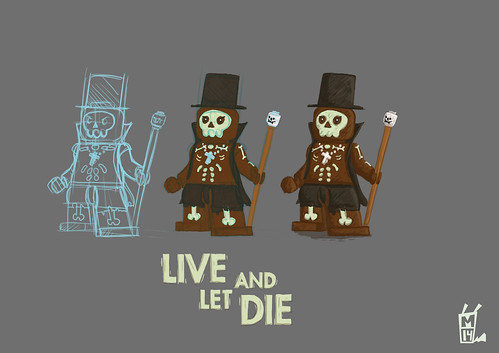
Baron Samedi
Flickr Credit: Julien CARTRY
And yet… Kananga, Nero, Rugen, the Darkling, Thorne, the list goes on and on. No matter how much you root for justice, you also have to root for these guys, because they are fantastic.

Take that, my poor league of gentlemen. You deserved what you got.

Tuesday, February 3, 2015

The Gift of Language

A Gift

I have an awesome friend in Japan who sent me a Sherlock manga for Christmas. It’s beautiful, soft cover, and came in the mail with twelve stamps—I almost felt like I was getting mail from the Weasleys. I haven’t taken the time to start really looking at the book yet, but sometimes one has econ homework. Blast.

But, fun fact, I don’t speak Japanese, much less read it.

And yet, I’m still excited.

What I think sometimes we misunderstand about languages is that we assume they are foreign merely because we do not speak them. This is silly. Certainly, it’s not my native language. And yes, it originates from another country, revolves around a different culture than mine, including the different slang, customs, and representations of a place I’ve never been.

Somewhere, though, I don’t think it’s that foreign to me.

I think of the language I am actually learning. Español. Tomo una clase de AP en las tardes con ocho otros estudiantes para practicar el idioma por clases en el futuro, y, quizás, viajes a los países hispanohablantes. Durante el verano, fui a la España con mi padre, a Madrid y Barce. Es un país hermoso, pero siempre puedo retarme en mi casa, también. En el año pasado, compré mi libro favorito en inglés para leerlo en español: HIVE, Escuela de Malhechores.

No entendía la mayoría del cuento. No me importaba. Es posible que el cuento haya sido tan familiar, pero también, la otra lengua me trajo otros pensamientos. Dichos. Vocabulario. Una perspectiva diferente.

And sure, I assume you might not speak Spanish. That’s okay. There may have been words that stuck out to you because they sound the same in English. Futuro means future. Surprise! Clase means class, practicar means practice—you get that there are cognates.

I don’t speak Japanese, but I expect that somehow, it’s not going to matter, completely. I have the help of the Internet to take a look at introductory characters, and a friend who lives in Japan to boot. Even then, it’s a manga so there are pictures.

Someone has made a meaning for me; I merely have to find it.

Yes, I have gotten an awesome gift. And sure, I won’t know everything. But when I was speaking in Spanish, did you think I had abandoned you forever?

So, what’s one of the best gifts you’ve gotten, lately? And, what are you reading this week?


Tuesday, December 23, 2014

Knowing My Audience

Flickr Credit: Neal Fowler

My mom buys an off-brand of band-aids, which is in the bathroom, since that’s a great place to bleed. On it is a group of smiling children.

I don’t know if you have ever needed a band-aid, but I have had paper cuts and scrapes and bike accidents and tears and let me tell you this: when I need a band-aid I am usually not smiling.

I have concluded that perhaps this off-brand needs to reconsider its audience.

All right, I get it. We don’t like buying products that have crying people on them. Boo-hoo, blood and infections and crap. Just perks up your day, I’m sure.

But it’s funny, because I’ve never given a lot of thought to my audience before. It strikes me now that I’m in an actual editing phase of working with a novel; the first draft results in incredibly liberal writing, as perhaps you yourself know. When you write, you write for you and the story and the fifteen minutes you have before Dad insists it’s time to go to bed you have school in the morning.

It’s the later drafts when you realize, “Hey, somebody might read this.”

The band-aid box really isn’t looking for smiling people. The reason that company makes money is because people have accidents and pain in their life. If I’m completely honest, I don’t believe that a simple band-aid does much to create smiles either—what they do is fill a need.

If you have a band-aid, you’re protecting a wound from infection, you’re providing an environment for it to heal, and you’re potentially preventing the spread of disease as bacteria pass from your wound to the environment around you. Also, for some reason band-aids make me feel better. It’s a comfort item.

That is why people buy band-aids.

This begs the question: why would someone read my story?

There’s not as much a need for my story to be told. You will not get an infection if you do not read my book, nor is it likely that its pages will prevent the spread of S. aureus.

Why would someone read my story? And what do I want them to know coming away from it?

I’m not sure I have all the answers right now. I know that I do have a message I’ve been toying with—you can bargain with destiny. It’s not a popular message, either, and probably not a big motivator.

Why would someone read my story?

And if they would, who would that person be?

Band-aids look to the bleeding to make their money. I have to look to the reading to discover where I might make mine. There is sentiment, and storytelling, lessons learned and passions unexplored. There’s dreams. There’s pain.

But why would someone read my story?

And, if they would, will I ever find them?

Tuesday, December 2, 2014

To His Coy Mistress: A Matter of Perspective

Europeana Credit: London Science Museum
This is going to be hard and fast: we just read this poem in English today, and there’s only twenty minutes left before I have to go to lunch.

 The poem’s called “To His Coy Mistress,” by Andrew Marvell, and you should go read it, because it’s funny. It’ll give you context as to what I’m going to talk about, but it’s not actually what I’m going to talk about.

 See, I wouldn’t have enjoyed this poem a few years ago. I remember in my Freshman English class, reading Romeo and Juliet and being—not offended, I think, but kind of peeved that there seemed to be so many references to sex and I didn’t think they were funny or clever or anything.

 It is likely that little Heather who kept the more recent update from expecting to enjoy Othello when she had to read that two months ago.

 But I realized something then, as Othello and Iago and company started dropping their little innuendos.

 It was FUNNY.

 “I’ve been told wrong,” I thought, horrified. “Shakespeare can’t be boring if he’s actually funny.”

 It was a startling realization. But even more startling, as I read this poem and another, comparing their lusty advances on virgins, insisting that, hey, we don’t have all the time in the world so let’s jump to the part about sex—I realized that younger Heather wouldn’t have even given this stuff a chance.

 I don’t think it came from the way I was raised (other realizations about things have come even within my own house) or my lack of a sense of humor: I’m pretty sure it was there. I blame middle school. Sex was something that you whispered about and giggled and lolololol SEX.

 And I’m not saying that we don’t still say those things in English class nowadays, a handful of years later. The difference is: we say it out loud. These two guys, brilliant each in their own right, had very loud interpretations of the coy mistress’s lover, and they were funny.

 The social norm has changed. It’s not bad—literature is pretty much affairs and murder and saying something about the human condition, so we have to be able to talk about it. But it is different.

 While I’m glad I retained some innocence as a Freshman, I also wonder what she would have thought as I hastily scribbled the last part of the assignment on the back of my worksheet: explain what your favorite poem was and why.

 I liked “To His Coy Mistress,” because even though the speaker is a condescending bastard, it’s clever. And I liked the Biblical allusion to describe time.


 I guess, you could say, it’s a matter of perspective.

Tuesday, November 25, 2014

Taking Offense

Follow my blog with Bloglovin

Flickr Credit: Celestine Chua
There are a few best things that have ever happened to me, but one I will never forget happened last year in my English class. We were reading part of Slouching Towards Bethlehem by Joan Didion.

And I’ll be honest—it was great writing, but I didn’t like some of the ideas. Like, they made me uncomfortable. No one else seemed to mind, and it wasn’t a raw-shocking-graphic-bundle-of-horribleness-meant-to-scar-me-for-life. I read it.


But it bothered me. That’s when my English teacher gave me the most important lesson he taught that year.

“It’s okay to be offended.”

Woah.

What a concept.

And I pondered it. Like—it’s okay to be offended! It was liberating.

The paradigm shift exploded in my brain. And I thought about it. To some degree in the society I know and don’t always love, there’s this expectation that you will not get offended. In fact, it’s almost offensive to be offended.

Someone says I’m stupid—“Oh, don’t get upset. They’re just having a bad day.”

Someone commits a crime—“It’s really none of your business.”

Someone jabs at my religion—“Everyone can believe what they want; don’t hate on other people’s beliefs!”

It’s not that they don’t always have a point. Maybe that person is having a bad day, and I need to be extra forgiving towards them. It’s possible that the kid who committed a crime is having family issues, and it’s not my job to speculate. And my own response to the religion quip might have been made emotionally, rather than with kindness or reason.

But my problem is this: by making that excuse, that person is saying that it is wrong to have an emotional response to what I have just experienced.

How I present that emotional response is another matter entirely—I know.

Nonetheless, I think sometimes we forget that it’s okay to take offense. Attending a public high school, I’m familiar with many four-letter words, and it’s easy to become desensitized to their meaning. But maybe we shouldn’t. One of my favorite episodes from the TV show Arthur is called “The Bleep,” where D.W. learns a curse word. At first it’s a funny thing she’s learned and she shares it with her friends, but later, when she’s distracted and angry, she yells it at her mother—you can imagine she’s in trouble.

And I always liked the way Mrs. Read explained it to D.W. later. “It’s like saying ‘I want to hurt your feelings.’

There are a lot of things out there that are controversial, and sometimes people take offense at things that should be no matter at all, and sometimes people ignore things that, logically, should really hurt them.

As readers, we run into things that may offend us sometimes. More than once books have been banned because someone has been offended, perhaps over a small thing. People will defame an author for a discrepancy and shame readers for enjoying what they’ve read. It’s not cool.

But I also understand.

There should be a middle ground, in my opinion. Some things happen in books that we should not promote in real life, and there are books that are appropriate for some ages and not for others. Death is much more permissible in fiction. You’ll notice that 50 Shades of Gray doesn’t show up in many elementary school libraries. There’s a separation.

Therefore, I think we should learn to take offense gracefully.

I googled “How to be Offended” and aside from the first hit, everything else advises you how NOT to be offended.

This is the one link, and I think it’s worth the read, but I think I’ll add my own procedure for learning to be offended, especially because it is so easy to run into reading material that may bother us.

Now, there’s always the option of just closing the book or the window and saying, “I don’t want to read that,” which is fine. There are things not worth your time or your energies. But sometimes there is material we’re stuck with, in which case I find it better to use this method:


  1. read it twice—rereading something familiarizes you with the text, which is going to be important for the next steps
  2. pinpoint the offensive parts—in most circumstances, you can describe why something in particular is offensive
  3. reread the offensive parts specifically—there’s almost always a reason someone writes something; the unfortunate truth may be that it is intended to hurt your feelings, but it’s also possible that this person merely wants to be informative or is trying to make a point
  4. understand—figure out the exact meaning of what this person means, be sure to take into account irony or any other factors
  5. make a decision—did this change your mind? Maybe it did and maybe it didn’t, but I’ve always found it affirming to state my conclusion.
    1. “Even though I’ve read something that bothers me, it turns out that I still have the same opinion I did before.”
    2. “Wow, this really changed my mind about that issue.”
  6. reconcile—do you need to take action? (NOT: do you need to ban this book?) Do you need to discuss your value system with someone? Do you need to find a website or a person so you can ask more questions? Or is this a case where you should close the covers and say, “I’m glad I learned something about another perspective—but I think I’m done for now.”?

The exact timeline of this process can vary. It took me the duration of the assignment to figure out how to deal with being offended at Joan Didion’s piece. But I’m glad I read it, and that I did it, because I have a better way to handle emotional blows now.

So, go be offended, I guess. Enjoy it. And, when you’re ready, decide what you’re gonna do about it.

How do you handle a situation when something offends you?

Tuesday, October 14, 2014

In Defense of Writing Delays

Flickr Credit: mpclemens
If you haven’t heard of NaNoWriMo, I assume that you are one of two groups: a) not a writer, or b) a new writer who hasn’t been around long. Both of those are fine: the existence of National Novel Writing Month never once mentioned itself to me until I was in eighth grade.

I succeeded that year, tried the next year, got bored, and haven’t done it since.

I will not be writing a novel next month. I’m writing one in December. It’s a superhero story, family based, about divided loyalties and duty and a bunch of great stuff I haven’t really hammered out yet. I’m planning, and I’m working on getting into the genre.

I am totally cool with this.

There are a lot of lists out there telling you to give in, do NaNoWriMo, and with reckless abandon just let your novel fly onto the page—I’ll give you an argument for the opposite.

In Defense of Writing Delays (Or, 5 Reasons Why You Don’t Have to do NaNoWriMo)

1. Community is Distracting—well, that’s not something you hear every day. Yes, writing groups and circles can be super exciting and encouraging, but they’re also another reason to be on the Nano website (not to mention Facebook, and Pinterest, and our email, and why don’t we go on Youtube while we’re at it?). Some people need community, but not everyone can handle the self-control community requires.

2. Timing Complications—now, you are always going to hear that every day is busy—write anyway! This is true, but at least in my annual schedule, November possibly the worst month I could choose to write a novel. April is another one. I’m not going to deal with a crackdown month in school and a novel at the same time; my energies are better focused on small projects. ALSO, Nano almost makes it sound like you can’t write a novel any other month. Guess what? You can. I’m writing my novel in December, because there is less stress and more time available to me—I’m sure I’m not the only one.

3. Pressure and Competition—this isn’t two teams pitted against each other at the Superbowl, waiting for devastating loss and heartbreak when your team loses to Victoria’s, goshdangit—it’s a friendly activity among compatriots. Nonetheless, some people don’t want to deal with that kind of pressure, myself included. If something happens, fine, I still haven’t lost anything, and I can work just as hard without repercussions.

(As you may have noticed, I am rather lax when it comes to my writing habits, which is perhaps why I am not the best writer in the world.)

4. Readiness Factors—I’m not ready to write my novel. You may not be ready, either. Despite October being “National Novel Planning Month” I am not the kind of person who can fit her ideas into a month of thinking. I’ll write when I’m ready. On the flip side, you may be ready to go this instant—why wait? Like Nike might suggest, it’s totally okay to “just do it.”

5. You’re Still a Writer Anyway—interestingly enough, a writer writes. They don’t have to blog, share their writing, do NaNoWriMo, or anything else, so long as they write. I don’t think Nano is much fun. If you don’t, don’t plague yourself: you can still be a writer anyway.


So there you have it. Blogging. NaNo. Nope.


What do you think? Are you going to do NaNoWriMo, or are you skipping this year? Why?

Tuesday, October 7, 2014

Henry V


I want you to understand that I have had a very busy weekend.

I spent Saturday getting through quite a bit of homework, not to mention other writerly duties and editing my application for the biggest scholarship in Colorado. I drank tea Saturday night and ate chocolate chips whilst I developed a new system of classifying villains I simply cannot wait to unveil in a few weeks.

Sunday was spent at church, and other than homework, editing two novels, planning another one, and writing other blog posts, I spent an hour and a half (or 30 Christmas songs, if you prefer), developing a Hogwarts castle and promptly filling it with dinosaurs.

Clearly, I am a busy girl.

For that, I have decided to humbly present a stimulating video produced by my favorite comedy show, so that you might learn a little bit about Henry V.


I expect your full forgiveness. Expect a better post next week!

Tuesday, September 2, 2014

On Suffering


Flickr Credit: KristyFaith

I do not want to write this post. In fact, I have been actively avoiding writing it ever since I wrote the last
one. At first, I thought I had time. Then I got sick.

I do not know what it is like for you when you get sick. Maybe you enjoy getting sick, because you get off from school or work. I have not taken a sick day in nearly six years—and it is not fun. I do it because I don’t want to make up work. And also to prove that I can.

I do permit myself to get sick on the weekends, and I am writing this on a Sunday. My nose and lips are chapped and I keep pulling off flakes of dead skin that itch if I don’t and sting if I do. I don’t like moving my lips. My head throbs when I cough—less than it did yesterday, but still some. My back is sore especially, and my knee. I don’t know why, but apparently organs that have no business feeling ill decide that they can catch a cold too. There’s a tickle in the back of my throat that is a cough yet to come, and it will bring with it gobs of phlegm when my lungs can take no more. And my lungs have taken quite a beating.

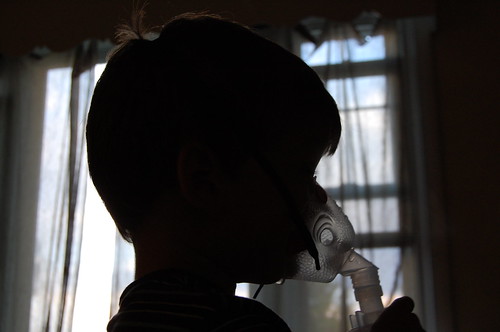
You see, I have asthma. A cold that could take a normal person 2-4 days to get over might take me a week. Maybe more, if it’s bad. I woke up this morning hyperventilating, not because I was panicking, but because my lungs had contracted to the point where I could not logically meet my oxygen quota if I wanted to survive. I wrangled up my medicine, started my penguin nebulizer, and breathed.

There are a lot of good feelings in the world. It feels good when you are loved. It feels good when you finish an Avengers movie. It feels good when you wake up to a red sky and white snowdrifts. But to this day I maintain that there is no better feeling than being able to breathe again. It hurt to suck air into my lungs, but I didn’t care, because the pain was better than the wheezing.

I’m not complaining—that is simply how it is. It sucks when I am sick, but if I think about it, it is the same for all the book characters we know and love.

There is suffering. It lasts. It’s not easily solved. Things hurt in places they aren’t supposed to hurt, and there are other distractions that are only making it worse. They wake up to the terror of almost losing the battle, only to find a way to make it through… at a price.

Voldemort is on the prowl, he has spies everywhere. Harry has to deal with breaks in friendship, he doesn’t know where to go, and the Dark Lord’s wish is that he sacrifice himself alone in the forest. They will win… but the dead piling up don’t see their newfound freedom.

Frodo has the ring, but the land is devastated and he doesn’t know if he will make it. There is only Sam, and him, and Gollum, and Gollum wants the ring. He doesn’t want to throw it in—but he will, and the darkness will end… but Frodo will pay for with his health and free memories until he goes to the Grey Havens.

There is a huge mess, the Cat in the Hat has abandoned them, and Mom is coming home this instant. They clean up, but, ironically, the children must lie to their mother to maintain their integrity.

Scarlet.

Otto Malpense.

Jane Eyre.

Captain America.

Jesus Christ.

There is suffering. And that matters. Not everybody has such a hard time with colds. Some people are sent to put a ring down a volcano and defeat the evil eye that has watched the land for many years. Some people are sent to die for the world’s sins and go to Hell. But some people get colds.

The point is this: every book, every story must have suffering. There is no point otherwise. Maybe you felt sorry for me when I described my cold, maybe you didn’t. But regardless, you did learn that I am in a fight, and that makes me interesting. I am not just sitting at this computer, scrolling through Pinterest and chatting with my friends. There are other things, other pains, and they haunt me even past my sleep.

And that is why it matters to them too. Characters must be interesting—even the secondary or tertiary characters. They must have pains. They must have struggles that they will die for or die from. It makes us care… and the good ones remind us of ourselves a little bit, too.

How do you feel about suffering?