Showing posts with label Reviews & Ratings. Show all posts

Tuesday, February 17, 2015

The League of Gentlemen: A Disappointment

Sometimes I wish there were real, classy villains.

James Bond villains. Classy villains. Delicious men with such twisted idealism and beautiful plotting that you can’t help but fall into their gushing grins and want to be evil, too.

(On an unrelated note, I am wary of getting married because inevitably I only fall in love with people of questionable moral fiber, and I don’t want to spend the rest of my life in prison.)

There’s a scene in the episode “Engagement” in the second season of the show The Vicar of Dibley, wherein the Vicar invites Hugo to tea with her. She assumes he’s wondering why she’s asked him over, but to her surprise, he claims he’s figured it out.

You know the film League of Gentlemen, where they gather together the seven master criminals of the world, each of them skilled in their own particular trade—master of disguise, master lock-breaker, explosives expert, etcetera—are all assembled to pull off the greatest robbery of all time. I assume it’s that; am I right?”

He isn’t.

But, I did get the film to watch with my father—this old black and white film from the sixties that I had to borrow from another library system—just to see what Hugo is talking about.

via hypnogoria.com
Fair enough, men who have all been slighted in one way or another by the government/military gather together, all hoping to steal enough cash to embarrass their enemies and live comfortably on an island somewhere until they die.

It was an okay movie, I suppose (obviously, I have to make allowances for the film quality and choices, simply due to the era in which it was filmed), but the story frustrated me. Because these were not classy, dazzling men. They were miffed military men in suits and with petty crimes on their hands.

They ran everything like a polite military operation, secret and dirty and secluded in a day and age before security cameras and annoying neighbors could easily rat them out. Sure, they wore the right clothes, but the silkiness of an Alpha was completely absent.

What was worse, spoiler alert, in the end, they all get arrested because a little boy noticed the faulty plates on their getaway truck. He turned them in to the police and they tracked down the owners.

That made me mad—oh, why did they have to lose? Dad looked at me mildly amused, and reminded me that this was the sixties, and in the end the government and goodness had to win.

Which I thought was stupid.

Granted, I have a sense of morality (somewhere…) and I do tend to have faith in my government, and in the people around me to do the right thing at the right time. Murder is wrong, being mildly rude to someone isn’t particularly acceptable, and I go to church.

All that kind of goes away as soon as I enter a fictional novel.

Books broaden perspectives, change the fabric of morality, philosophy, and science simply as the author sees fit. Gods can be created and destroyed, beauty designed and ugliness tempered. Murder becomes a goal, death is desire, blood is a must and it glitters like rubies on the floor. I expect to breathe in the injustice from the pages and absorb it and breathe it out like smoke.

I wanted them to win… Obviously, this league of gentlemen wasn’t perfect and in fact, with a couple of tweaks to the storyline, I could have easily foiled their plan from the comfort of my own living room.

But I wanted them to win, because they were still the heroes. Their evil was the good. And they disappointed me.

Sometimes I wish villains were real. Not because I don’t have a sense of morality, or because I think that their fundamental actions and beliefs are justified. Sometimes I simply wish that there were people like that—classy, with shiny shoes and tailored suits, neatly combed hair, secret lairs, massive danger, and ultimate calm. People who can do their evil right.

Of course, I should be careful what I wish for. Getting kidnapped by terrorists would probably be just as educational, but I doubt I’d enjoy it at all.
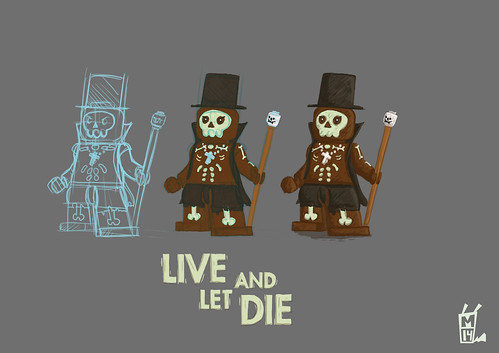
Baron Samedi
Flickr Credit: Julien CARTRY
And yet… Kananga, Nero, Rugen, the Darkling, Thorne, the list goes on and on. No matter how much you root for justice, you also have to root for these guys, because they are fantastic.

Take that, my poor league of gentlemen. You deserved what you got.

Tuesday, September 9, 2014

How I Rate Books—And Why it Matters


Flickr Credit: GSFC

2009, Rick Riordan publishes The Last Olympian, and I’m like, in seventh or eighth grade. I read it, and I love it, and I scribble it on my reading log in nearly indecipherable script. (De veras, I never realized how much my handwriting has changed in the last half-decade until I saw what a mess my writing used to be.)

Now, there was this 1-4 star scale on the Reading Log, which I actually attempted the first month I used it. Then I read The Maze of Bones, also by Rick Riordan, and gave it a 10. The Hunger Games got 150, North! Or Be Eaten got 2 million, Airhead got 11 million, Pandora of Athens got “like a gazillion,” The Emperor’s Code got a “centillion,” and The Lightning Thief and almost all subsequent books got infinity.

Then came The Last Olympian, and my poor little heart was filled with too much joy for infinity, so I’m sure you can guess what I rated it—“more than infinity.”

Yes, I still have those records.

What my 2009 self did not realize was that while infinity was very complementary towards Mr. Riordan’s books, I was completely devaluing every other book on my scale. Yeah, compared to a score of 2 (which I gave to Lord of the Flies) 2 million is a lovely score, but when you get up to 11 million and from there “more than infinity,” that’s not complementary at all!

As highly as I wanted to praise these books, I could only do so by shaming other books I’d read—some of which I truly loved.

When rating books, or anything, there always has to be a set scale. Amazon has a five-star scale, as does Facebook. IMDb uses a score out of ten, and Rotten Tomatoes gives a percentage out of 100. All things considered, each of these scales could be standardized to all match, and technically nothing would change, but I find that would take away some individuality, as well.

So where does that leave us? When creating a scale, we need three things:

1) Standardization—there must be a scale of some sort to encourage fair and easy comparisons, which will also demand specificity from the rater.

2) Simplicity—Infinity is a bad scale to go up to. It’s also hard to rate value based on electron content or whether it can pass rites of fire in your backyard. Make it easy to understand and easy to replicate, if necessary.

3) Individuality—What does each star (or number) mean? Is it like in school, where a 75% equals passing? Or as with Amazon, does 1 mean “I hated it,” 3 mean “I liked it,” and 5 mean “I loved it”? Will you choose an even scale, that demands choosing a side, or will you allow some gray area? How does this scale represent you, and what you believe about the content you’re reviewing?

Nowadays, I’m going on a five-star scale with a bonus question. It serves my purposes as a reader and watcher of movies, and it allows me to truly honor the media I love in reviews, and make sure I know what I want to return to.

Here’s what it looks like for books:

5—An amazing book, which I love and will remember fondly for years to come. Usually I identify with the characters, enjoy the plot, and admire the author’s choices for the text.

4—A good book, which is fun and interesting. It has good characters, a good plot, and there’s nothing wrong with it. It is simply a darn good book and I will enjoy rereading it.

3—An okay book, which was worth the read but imperfect. Maybe it wasn’t realistic, maybe it’s not my genre, maybe the plot was holey. I’d read it again, but I wouldn’t cry if I accidentally dropped it in the bathtub or something.

2—A poor book, which could have all sorts of problems, but isn’t completely past redemption. I’d reread it… probably.

1—Not worth reading again or I couldn’t finish it. Some books simply do not interest me or are so poorly written I can’t bother to see them through.

However, on my current reading logs, I don’t actually use this star system! That’s only for reviews on my other blog, Sometimes I’m a Story. When I’m putting books in my spreadsheet, I take into account one question:

Would I Read This Book Again?

To be willing to read a book again and again is, quite honestly, the highest praise I could ever give. If the answer is yes and I get stuck with varying degrees of quality, so be it. But I’ll save myself from the one-star books, and that is plenty for me.

What about you? How do you rate books? How does your system differ from mine?

Flickr Credit: Gabriel Lima